

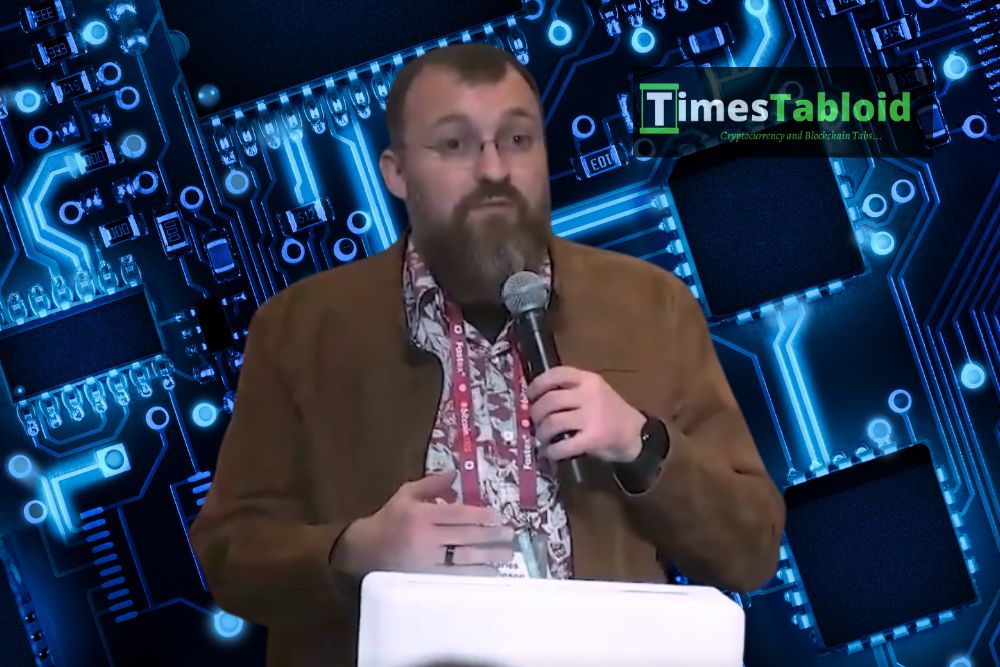
Crypto analyst Steph Is Crypto (@Steph_iscrypto) brought attention to comments made by Cardano founder Charles Hoskinson regarding the CLARITY Act. The bill has broad support from major crypto figures, but Hoskinson sees it differently.
In a March 3 livestream, he walked through the bill’s text and argued it creates serious regulatory risk for almost every digital asset in the U.S., including XRP.
🚨CRAZY:
Charles Hoskinson warns that even $XRP could still be classified as a security under the CLARITY Act.
He says the SEC has FOUR different pathways to do it. pic.twitter.com/PGY6GShgyJ
— STEPH IS CRYPTO (@Steph_iscrypto) July 26, 2026
The Bill’s Security-by-Default Structure
Under the bill, all new digital assets start as securities by default. To escape that classification, a project must petition the SEC and prove its blockchain qualifies as a “mature blockchain system,” meaning it is sufficiently decentralized and no longer reliant on the issuer’s ongoing efforts.
Hoskinson applied this test to XRP directly. When XRP launched in 2012, the network was centralized around its founders and Ripple Labs controlled the token distribution. Under this bill, XRP would have started as a security.
Four Attack Vectors
Hoskinson outlined what he called “attack vectors.” These are mechanisms within the bill that an adversarial SEC could use to block projects from ever graduating to commodity status.
The first involves the 60-day review clock. The bill does not require the clock to start automatically upon filing. The SEC can define its own completeness standards and issue deficiency letters on day 59, pausing the process indefinitely.
The second targets open-source development. The SEC could define “common control” to include developers who share a funding source, contribute to the same code repository, or coordinate on upgrade timelines within 18 months. Most crypto projects would qualify as centrally controlled under that definition.
The third involves wallet ownership verification. Projects must prove no single entity controls more than 20% of network stake. This could have been a sticking point for XRP as Ripple currently holds around 33% of the asset’s supply.
We are on X, follow us to connect with us :- @TimesTabloid1
— TimesTabloid (@TimesTabloid1) June 15, 2025
The fourth targets value attribution. The bill ties commodity status to whether an asset’s value derives from on-chain utility rather than speculation. The SEC defines that test through rulemaking. Hoskinson said every cryptocurrency, including Bitcoin, would fail a strict interpretation of it.
The Grandfathering Question
Hoskinson acknowledged that XRP, Cardano, and Ethereum will likely receive grandfathering protections. His concern extends beyond those projects. “We’re going to pass it, roll the dice, and hope to God that people don’t do the four things I just said,” he stated.
He warned that a future administration hostile to crypto could deploy these same attack vectors against any project, established or not. His position remains that a bad bill is not better than no bill.
Disclaimer: This content is meant to inform and should not be considered financial advice. The views expressed in this article may include the author’s personal opinions and do not represent Times Tabloid’s opinion. Readers are advised to conduct thorough research before making any investment decisions. Any action taken by the reader is strictly at their own risk. Times Tabloid is not responsible for any financial losses.
Follow us on X, Facebook, Telegram, and Google News

