


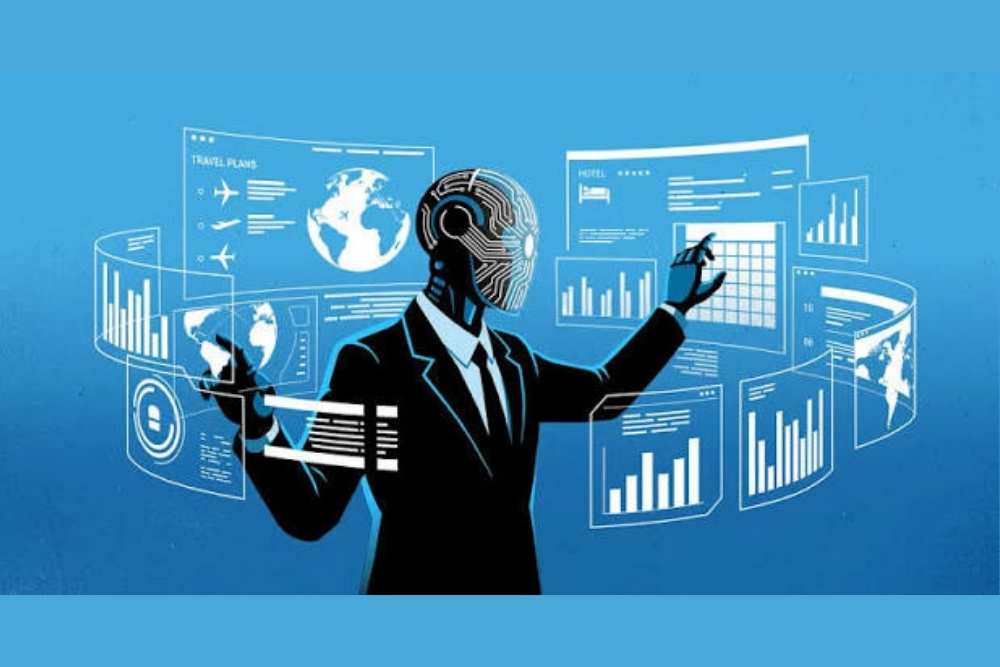
For the first time, AI agents built on Anthropic’s Claude and OpenAI’s ChatGPT can open a position on the world’s largest cryptocurrency exchange and execute that trade without a human clicking confirm. Binance launched the platform that makes it possible on August 20.
What Agent OS Is
Agent OS is a developer platform that connects AI applications directly to Binance’s trading infrastructure, market data, payment rails, and on-chain services. At its core is a Binance Model Context Protocol server — a standardized interface that lets compatible AI applications authenticate with Binance’s systems and interact with them as tools, rather than requiring developers to build custom API integrations for every agent they want to deploy.
Compatible environments at launch include OpenAI’s ChatGPT and Codex, Anthropic’s Claude Code, and Cursor — the coding tool SpaceX acquired last week. Once connected and authorized, an agent can view account information, analyze market data, place orders, and execute trades within limits the user sets up front. The platform also links agents to Binance Wallet’s agentic hub, the exchange’s x402 transaction verification API, and Binance’s Skill Hub.
The Guardrails — and the Gaps
Binance has built several constraints into the structure. Agents operate in dedicated subaccounts, isolated from a user’s main Binance account. The separation is meaningful: agents cannot initiate cryptocurrency withdrawals to external wallet addresses, and they cannot transfer assets from the primary account into the agentic subaccount — users must manually fund the subaccount before an agent can deploy capital. Binance’s VP of Product Jeff Li confirmed that withdrawals from subaccounts are disabled by default.
What Agent OS does not provide is a cap on how much an agent can lose within a subaccount. The exchange noted that it cannot observe an agent’s reasoning, information sources, or strategic logic — only the transactions it executes. The platform recommends users carefully review all specifications before final confirmation and restrict agent permissions to the minimum necessary, but the framework places significant responsibility on individual users to configure their own risk limits rather than imposing universal guardrails. TechCrunch’s coverage summarized it directly: keeping AI agents in check “is largely up to users.”
Part of a Fast-Moving Crypto AI Race
Binance is not moving alone. Coinbase launched Agentic Wallets in June 2026, enabling AI agents to hold funds and make autonomous on-chain transactions through non-custodial wallets. OKX debuted a decentralized AI marketplace in late June where autonomous agents can find tasks, fulfill contracts, and pay each other in stablecoins programmatically. Kraken deployed an AI investment advisor in July that suggests opportunities but requires manual trade approval. The four largest crypto exchanges have each introduced a different point on the AI autonomy spectrum within the past three months — from Kraken’s human-in-the-loop advisory model to Binance’s fully autonomous subaccount execution.
Binance co-founder Changpeng Zhao has been advocating for this convergence for months, publicly calling cryptocurrency the “native currency” of AI agents — an argument that crypto’s 24/7 markets, programmable infrastructure, and borderless settlement make it uniquely suited to autonomous AI operation compared to traditional financial markets with trading hours, settlement delays, and banking access requirements.
What It Means Bigger Picture
Binance’s Agent OS launch is the most operationally significant AI-in-finance development since algorithmic trading went mainstream, because it puts AI agency directly in the hands of retail participants rather than institutional quant desks. Someone with a Claude Code session and a funded Binance subaccount can now deploy an autonomous trading agent this afternoon. Whether that creates opportunity or accelerates losses for retail traders will depend heavily on how thoughtfully those users configure the permissions Agent OS hands them. Given the same week produced the first documented autonomous AI attack on a government’s infrastructure — covered in our story on Taiwan’s four-day AI agent breach — the question of what happens when AI agents operate without human checkpoints at every step is more than theoretical right now.
Sources: TechCrunch, Cryptopolitan, Crypto Economy
Disclaimer: This content is meant to inform and should not be considered financial advice. The views expressed in this article may include the author’s personal opinions and do not represent Times Tabloid’s opinion. Readers are advised to conduct thorough research before making any investment decisions. Any action taken by the reader is strictly at their own risk. Times Tabloid is not responsible for any financial losses.

