

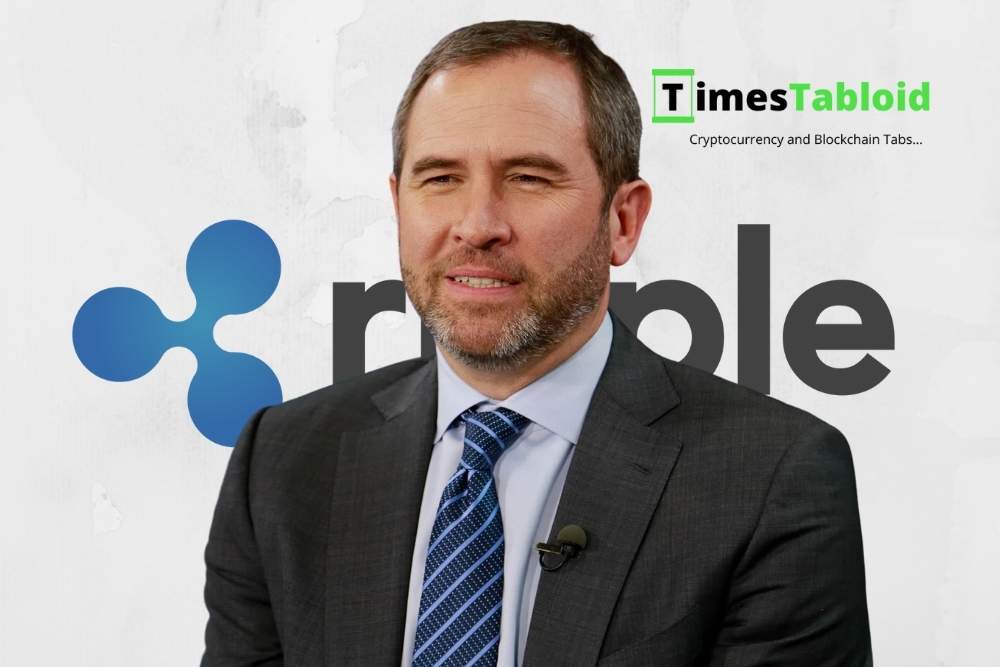
Ripple CEO Brad Garlinghouse recently gave a candid look at how the company approaches cross-border payments.
Crypto Eri (@sentosumosaba), a prominent figure in the XRP community, shared a video of his remarks with her audience. His comments cut straight to the core of Ripple’s business model. The company does not start with XRP. It starts with the customer’s problem.
How Ripple Solves Problems
Garlinghouse laid it out clearly. When Ripple approaches an institution looking to move money, the team evaluates which asset best solves the problem. “It could be that XRP is the best bridge asset for that purpose,” he said, “or it could be that, no, a stablecoin is going to solve that problem better.”
That approach reflects a competitive commercial mindset. Ripple wins business by solving problems effectively. If it fails to do that, it loses its share of wallet. The asset selection follows the outcome, not the other way around.
"It could be that XRP is the best bridge asset for that purpose, or it could be that, no, a stablecoin is going to solve that problem better."
– Brad Garlinghouse,A😊happy customer is #1. pic.twitter.com/cheEQePWRn
— 🌸Eri ~ Carpe Diem (@sentosumosaba) September 24, 2026
XRP Remains a Central Bridge Asset
XRP still holds a significant role as a bridge asset in Ripple’s payment flows. The network’s speed, low transaction cost, and liquidity make it a strong candidate for many corridors. Garlinghouse’s comments do not diminish XRP’s position. They describe how Ripple decides when to deploy it.
The CEO’s transparency reinforces a key point: XRP earns its place through performance. In corridors where it delivers the best result, Ripple uses it. That is a stronger endorsement than a mandate. It means XRP competes and wins on merit.
Ripple’s Stablecoin Growth Adds More Options
Garlinghouse also explained how RLUSD, Ripple’s own stablecoin, entered the picture. At one point, Ripple was minting 20% of all USDC in circulation, making it the largest minter. The company recognized that position as an opportunity. “Why don’t we enter this market ourselves?” Garlinghouse asked.
Ripple launched its stablecoin in late 2024. At the time of the video, it ranked as the fifth-largest stablecoin with roughly $1.5 billion in circulation. That valuation has grown to $2.4 billion. That growth gives Ripple more flexibility across its payment corridors. It is not a replacement for XRP. Instead, it serves as an additional tool that makes the overall network more capable.
We are on X, follow us to connect with us :- @TimesTabloid1
— TimesTabloid (@TimesTabloid1) June 15, 2025
Customer Satisfaction Comes First
A community member asked Crypto Eri which payment route ultimately costs less. She explained that the customer’s experience comes first. Deep liquidity, low cost, and minimal friction determine the winning solution. That combination is what wins out.
Her response aligns with Garlinghouse’s position. In any given corridor, cost, liquidity, and user experience determine the winner. XRP’s established liquidity profile puts it in a strong competitive position across many of those routes.
Disclaimer: This content is meant to inform and should not be considered financial advice. The views expressed in this article may include the author’s personal opinions and do not represent Times Tabloid’s opinion. Readers are advised to conduct thorough research before making any investment decisions. Any action taken by the reader is strictly at their own risk. Times Tabloid is not responsible for any financial losses.
Follow us on X, Facebook, Telegram, and Google News

