


The Nevada Transportation Authority voted unanimously Thursday to hand Tesla, Waymo, and Uber the permits they need to operate paid commercial robotaxi services in Clark County — a decision that, if the fleets reach full scale, will put up to 8,000 driverless vehicles on Las Vegas roads within the next year.
Who Got What
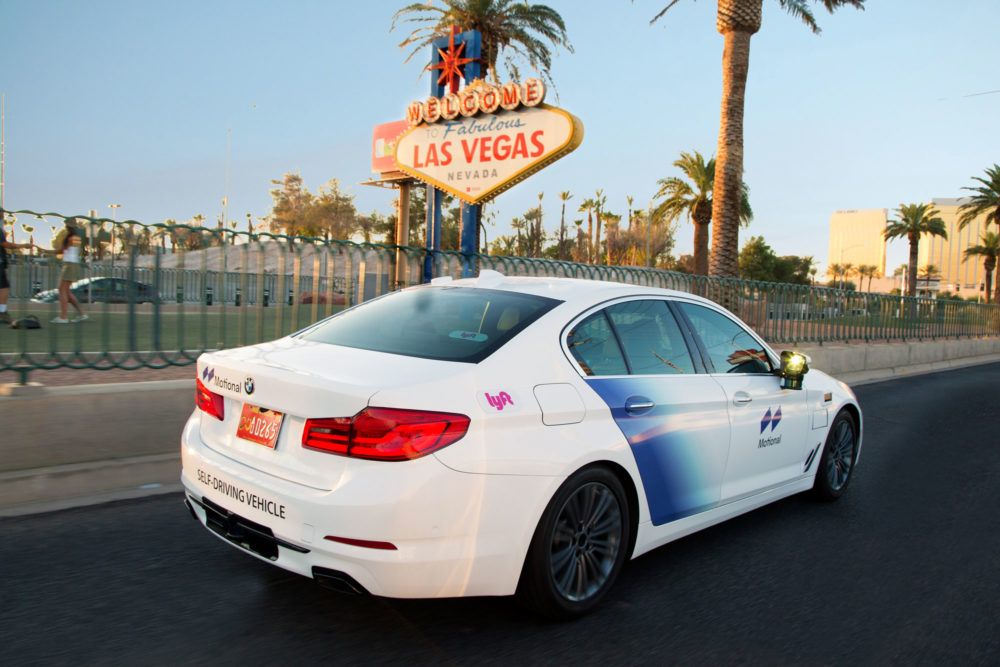
Tesla received the largest allocation: permission to deploy up to 5,000 robotaxis across Clark County, with a provision allowing the company to expand statewide if it notifies the authority in advance. Waymo received a permit authorizing up to 1,000 autonomous vehicles in the region — the company had already been cleared to operate driverless vehicles in Las Vegas since July, but this new permit allows it to charge for rides for the first time. Uber received a permit for an additional 1,000 robotaxis, which it will operate through its autonomous vehicle partners: Hyundai subsidiary Motional, using Ioniq 5 crossovers, and Zoox, which brings its purpose-built all-electric autonomous vehicles. Zoox already held a separate permit covering 100 vehicles, adding to that total.
The combined ceiling of approximately 8,000 robotaxis would make Clark County one of the most heavily authorized autonomous vehicle markets in the world — though every company in the room was careful to separate what they’re allowed to deploy from what they expect to actually deploy.
The Gap Between Permission and Reality
Tesla’s Cybercab chief engineer Eric Early was explicit about it during the meeting: “The 5,000 has always been a ceiling for us. I don’t think we’ll be in a position by this time next year to deploy 5,000 vehicles, and it’s not the technology.” The company said it would be “extremely happy” to achieve half that number — 2,500 vehicles — by 2027. Tesla will begin with driverless Model Y electric crossovers rather than the purpose-built Cybercab, which is still in the ramp-up phase. Waymo has also been publicly cautious about its Las Vegas timeline, noting the city is on its expansion list without committing to a specific date or fleet size.
Uber’s approach differs from its competitors: the company has explicitly pitched a hybrid transportation model in which human drivers and autonomous vehicles operate within the same app and service infrastructure, allowing it to flex autonomous capacity up during peak demand without displacing its human driver base entirely — or at least, not all at once.
The Opposition That Was Heard
The permits didn’t pass without friction. Representatives from the Livery Operators Association and local taxi companies appeared at the NTA meeting to oppose the approvals, arguing the rollout is moving too fast and too far. The workforce concern is straightforward: Las Vegas is a labor-intensive city, and the taxi and ride-hailing workforce represents a significant group of workers for whom driverless vehicle competition is existential rather than incremental. Proponents argue the expansion will create a different category of jobs — maintenance, charging, cleaning, and fleet management — though skeptics note that those roles are fewer and pay differently from the driving jobs being replaced.
Why Las Vegas as the Test Case
Las Vegas has specific characteristics that make it attractive for large-scale robotaxi rollout: a dense tourist corridor with predictable, well-mapped routes, relatively mild weather compared to northern cities, and a state regulatory environment that has historically been receptive to autonomous vehicle experimentation. It also has an unusually high concentration of potential riders — tourists, convention attendees, and nightlife visitors who need transport but don’t have or want a rental car. The Strip corridor gives early fleets a natural operating zone before expansion into residential neighborhoods.
What to Watch
The combination of Tesla, Waymo, and Uber competing for the same riders in the same geography is a first — no other US city currently has three major robotaxi operators authorized to charge for service simultaneously. The real deployment pace will surface quickly, as each company will need to begin operations or face questions about why permitted capacity is sitting unused. Labor groups are already signaling they will push for state legislative action, meaning the regulatory picture may not be as settled as Thursday’s unanimous vote suggests.
Sources: TechCrunch, Engadget, InsideEVs
Disclaimer: This content is meant to inform and should not be considered financial advice. The views expressed in this article may include the author’s personal opinions and do not represent Times Tabloid’s opinion. Readers are advised to conduct thorough research before making any investment decisions. Any action taken by the reader is strictly at their own risk. Times Tabloid is not responsible for any financial losses.

