


As lawmakers continue evaluating how digital assets should fit into the U.S. financial system, every public statement from major industry leaders is receiving closer scrutiny.
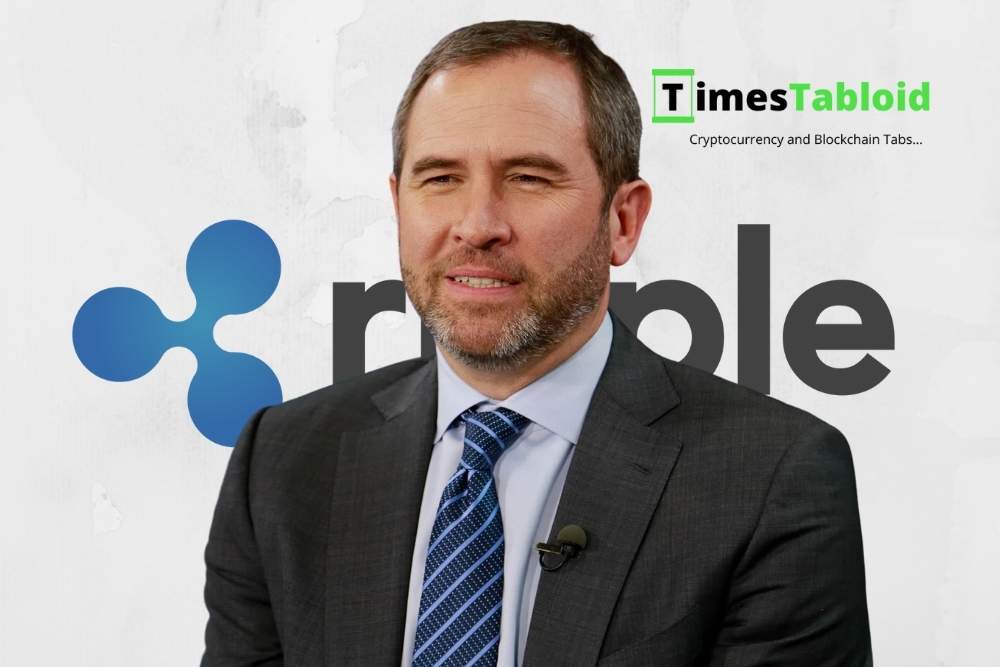
One crypto commentator now believes Ripple CEO Brad Garlinghouse delivered a message that extends far beyond regulatory reform, suggesting that XRP is already positioned to serve as critical infrastructure for the next generation of global finance.
Crypto commentator Pumpius claimed in a tweet that Garlinghouse made a subtle but significant point during his testimony before the U.S. Senate Banking Committee. According to Pumpius, the Ripple CEO effectively presented XRP as infrastructure capable of supporting a tokenized and interoperable global financial system, even without explicitly making that claim.
“I just realized something critical,” Pumpius wrote before adding that Garlinghouse had “subtly revealed something astonishing” during the hearing. The commentator stated that, when listened to carefully, the testimony positions XRP as “ready-made infrastructure” for “a tokenized, interoperable, global digital financial architecture.” Pumpius further suggested that these capabilities would make XRP “a natural bridge/settlement layer in any new multi-polar or tokenized financial system.”
I just realized something critical… 👀
Brad Garlinghouse subtly revealed something astonishing while testifying to the Banking Committee
If you listen closely, he’s positioning XRP as ready-made infrastructure for the exact system the committee is discussing: a tokenized,… pic.twitter.com/Yc2zLj9XV6
— Pumpius (@pumpius) July 4, 2026
Garlinghouse Highlights Ripple’s Existing Infrastructure
While Pumpius presented his own interpretation of the testimony, Garlinghouse’s remarks focused on Ripple’s products, regulatory approach, and the broader need for legislative clarity in the United States.
Introducing himself as Ripple’s CEO, Garlinghouse explained that the company now employs approximately 900 people across 15 offices worldwide. He reiterated Ripple’s long-standing mission of enabling what it calls the “Internet of Value,” describing a future where money moves as efficiently as information.
Garlinghouse also emphasized that Ripple already provides software supporting cross-border payments, stablecoins, and digital custody. He stated that financial institutions use Ripple’s technology daily to reduce friction, improve efficiency, and better serve customers in the global economy.
The Ripple CEO highlighted that the company leverages the XRP Ledger, which he described as a decentralized, battle-tested, open-source blockchain, alongside XRP to facilitate payments. He added that XRP was designed to support fast, low-cost, and highly scalable transactions.
Regulatory Clarity Remains Ripple’s Primary Message
A significant portion of Garlinghouse’s testimony centered on regulation rather than future price expectations or adoption scenarios. He stressed that Ripple has maintained a compliance-first strategy since its inception, working with policymakers and regulators while securing more than 60 payment, crypto, money transfer, and related licenses worldwide.
Garlinghouse also reflected on Ripple’s legal battle with the U.S. Securities and Exchange Commission, noting that the company ultimately prevailed after four years in court. He pointed to the ruling that XRP, by itself, is not a security, describing the outcome as an important milestone for the broader digital asset industry.
Looking ahead, Garlinghouse urged Congress to establish clear jurisdictional boundaries for regulators, create pathways that allow companies to build in the United States while protecting consumers, and pass comprehensive market structure legislation. He argued that such measures would strengthen U.S. competitiveness, unlock efficiencies across financial markets, and help position the country as a global leader in blockchain technology.
Although Garlinghouse’s testimony focused primarily on regulation, innovation, and Ripple’s existing technology, Pumpius believes the remarks also carried a broader implication. In the commentator’s view, the hearing demonstrated that XRP already possesses the characteristics needed to function as settlement infrastructure if governments and institutions move toward a more tokenized and interconnected global financial system.
Disclaimer: This content is meant to inform and should not be considered financial advice. The views expressed in this article may include the author’s personal opinions and do not represent Times Tabloid’s opinion. Readers are advised to conduct thorough research before making any investment decisions. Any action taken by the reader is strictly at their own risk. Times Tabloid is not responsible for any financial losses.
Follow us on X, Facebook, Telegram, and Google News

