

Solana recently announced a new partnership that instantly caught the attention of the crypto industry. The blockchain platform revealed that Western Union, the world’s largest money transfer company, will be building exclusively on Solana.
In collaboration with Anchorage Digital, Western Union is launching USDPT, a new stablecoin that will be integrated into its vast network spanning over 150 countries. The project aims to enhance cross-border remittances using blockchain technology, signaling a major step in traditional finance’s adoption of decentralized infrastructure.
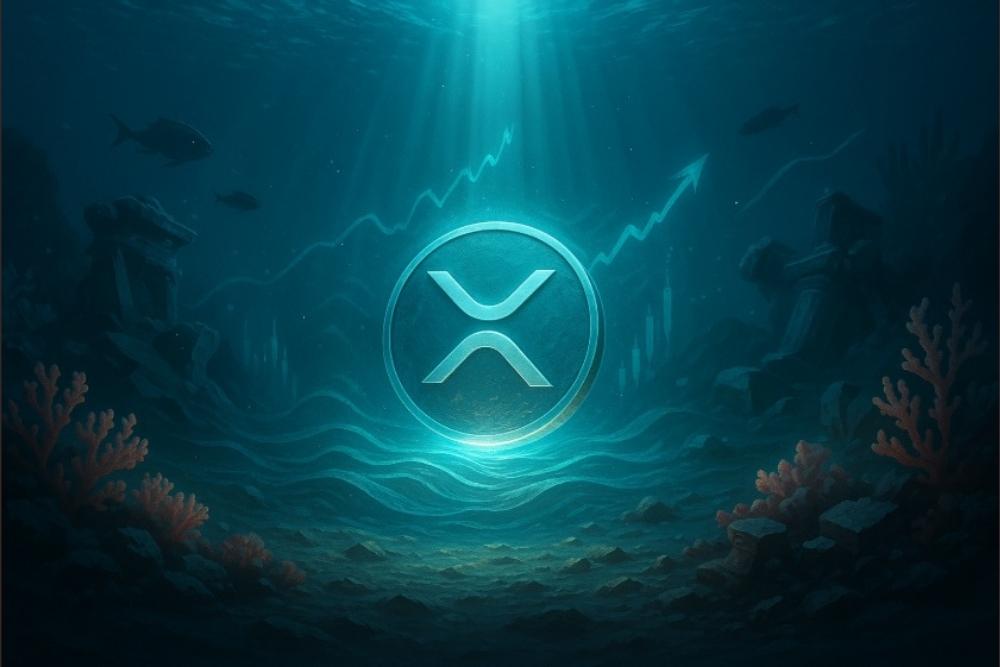
Clarifying Misconceptions About XRP’s Role
Following Solana’s announcement, technical analyst Charting Guy weighed in on the growing online debate over XRP’s relevance. He pointed out that many users appeared to misunderstand the distinction between stablecoins and XRP.
According to his remarks, XRP’s use case differs fundamentally from stablecoins like USDPT, and the Western Union-Solana collaboration does not diminish the importance or functionality of the XRP Ledger.
While he emphasized that stablecoins have existed for years, serving a specific purpose of maintaining price stability through fiat backing, XRP operates as a bridge asset designed for liquidity and settlement efficiency. His comments were directed toward those assuming that Western Union’s move away from RippleNet or the XRP Ledger indicated an industry shift away from XRP’s core utility.
a lot of uneducated people saying this is bad for $XRP and invalidates its use case
guys, stablecoins have been around a long time lol
$XRP’s use case is much different than stablecoins
maybe read up on what the xrp ledger actually does & how xrp functions
this means nothing https://t.co/yVQyglPYcl
— Charting Guy (@ChartingGuy) October 28, 2025
Community Perspective on Competition
Other users joined the discussion to provide additional perspective. One user, Maharaj, noted that industry competition should not be perceived as a threat. He argued that partnerships like Western Union’s with Solana represent normal business diversification rather than the invalidation of other blockchain projects. His comment highlighted the broader reality that financial institutions often experiment with multiple solutions to achieve efficiency and global reach.
We are on X, follow us to connect with us :- @TimesTabloid1
— TimesTabloid (@TimesTabloid1) June 15, 2025
Context in the Blockchain Sector
The announcement underscores the growing adoption of blockchain technology within established financial systems. However, it also reveals a recurring theme within the crypto community—confusion between distinct technological functions. Stablecoins like USDPT are primarily designed to facilitate fiat-pegged transactions with minimal volatility, while XRP’s design serves institutional liquidity and cross-border settlement processes.
Charting Guy’s remarks align with this distinction, reminding market participants that developments in one blockchain ecosystem do not automatically negate the relevance of another. The rise of multiple blockchain integrations across global finance reflects a maturing sector where varied technologies coexist, each addressing unique aspects of financial infrastructure.
In essence, Western Union’s partnership with Solana represents an expansion of blockchain use cases rather than a zero-sum event. XRP’s functionality within payment and liquidity systems remains unaffected, reinforcing the idea that competition and innovation can coexist in shaping the future of digital finance.
Disclaimer: This content is meant to inform and should not be considered financial advice. The views expressed in this article may include the author’s personal opinions and do not represent Times Tabloid’s opinion. Readers are advised to conduct thorough research before making any investment decisions. Any action taken by the reader is strictly at their own risk. Times Tabloid is not responsible for any financial losses.
Follow us on X, Facebook, Telegram, and Google News

