

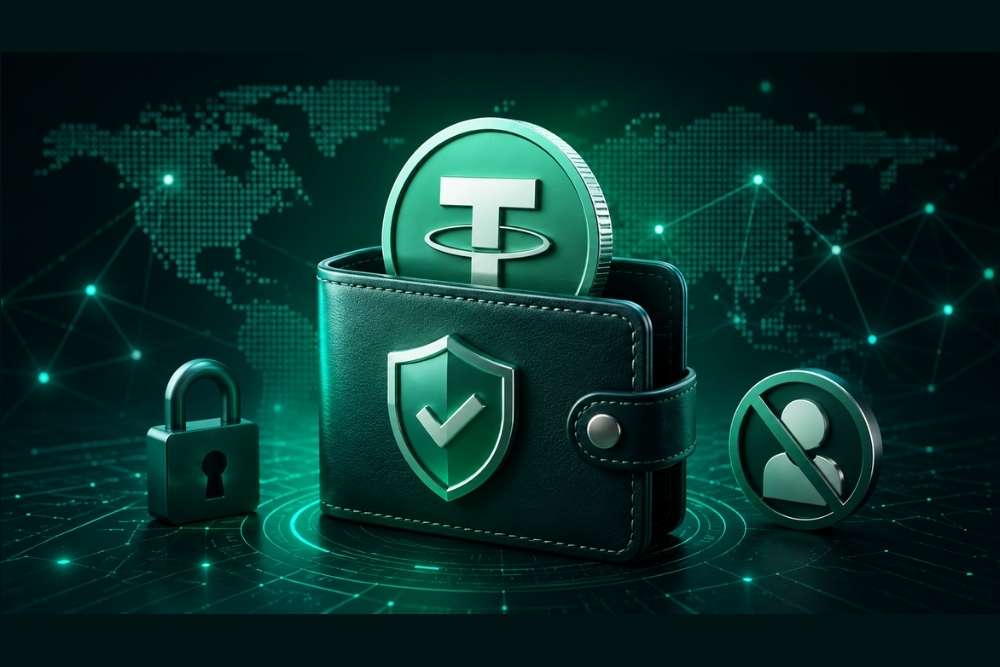
You hold 100 USDT on Tron. You go to send it, and the transaction fails. Not because you lack USDT, but because you lack TRX, a token you never wanted and did not know you needed.
This is the wall most stablecoin holders hit first, and the wallet they picked decided whether they hit it at all. Identity verification is the wrong question. Every wallet below skips it, which makes a no-KYC USDT wallet the starting point, not the destination.
The real question is what each wallet asks of you before it will move your money.
The Gas Token Nobody Warns You About
USDT is not a currency that pays its own way. A TRC-20 transfer on Tron consumes Energy or Bandwidth, and without staked TRX, the network burns TRX to cover it. An ERC-20 transfer on Ethereum needs ETH in the same wallet. The stablecoin sits there, spendable in theory, immovable in practice.
Some wallets absorb this. They take the fee from the USDT itself, or they hand you the tools to stake around it. Others leave the problem where they found it, which is fine if you knew it was coming.
That single mechanic, more than chain count or interface polish, is what separates a USDT wallet without KYC that works from one that strands you.
Six Wallets, Ranked by How Little They Ask of You
Every wallet here is non-custodial and requires no identity documents. The order below tracks how much friction stands between you and a completed transfer.
1. IronWallet
IronWallet is a non-custodial multi-chain crypto wallet with no KYC, 10,000+ supported assets, gasless stablecoin transfers, and WalletConnect Pay integration. Signup asks for no email, no phone number, and no identity documents, and the keys never leave the device.
On USDT, it removes the gas token entirely: send on Tron and the fee comes out of the stablecoin itself, with the same mechanic covering USDC on Ethereum.
Nothing is held in advance, and the same app carries Bitcoin, Solana, and four other chains. It runs on iOS and Android, with no desktop client.
2. Klever
Klever is a mobile self-custody wallet built around the Tron ecosystem, with staking, swaps, and its own token layered on top.
Creating a wallet requires no identity verification and no account. Its USDT handling covers the Tron fee for you, so a TRC-20 transfer needs no TRX balance, and the pricing is predictable before you tap confirm. The narrowness is the cost.
Holders with Bitcoin, Solana, or Ethereum balances need somewhere else to keep them, which makes it a specialist besides a broader gasless USDT transfer wallet.
3. Guarda
Guarda is a non-custodial wallet spanning web, desktop, and mobile, supporting several thousand assets across major networks. It asks for no ID, no email, and holds no keys.
For USDT, it charges a flat one-dollar fee taken from the stablecoin you are sending, replacing the TRX requirement with a number that never moves, which suits anyone budgeting transfer costs.
Frequent senders can rent Tron Energy from inside the app to go cheaper, though that adds back a step the flat fee existed to remove.
4. TronLink
TronLink is the official wallet of the Tron Foundation, non-custodial and available as a mobile app and browser extension.
No identity check stands between download and first transaction. Its USDT model is the network’s own: stake TRX for Energy and per-transfer costs fall close to zero, which beats every flat fee once volume climbs.
The price of that is capital and comprehension, since you must lock TRX up front and learn how Energy and Bandwidth work. It stays Tron-only, so a second wallet usually sits alongside it.
5. Trust Wallet
Trust Wallet is a non-custodial mobile wallet and browser extension covering more than 100 blockchains, with over 200 million users. Setup requires no identity documents and no account.
On USDT, it applies standard gas rules, meaning a TRC-20 send needs TRX and an ERC-20 send needs ETH, with no abstraction offered. What compensates is reach and safety tooling: a security scanner flags dangerous transactions before they execute, and a best TRC-20 wallet no KYC verdict here depends on how much else you hold.
6. Exodus
Exodus is a non-custodial wallet running on desktop, mobile, and as a browser extension, with a single recovery phrase syncing one portfolio across all three.
No identity verification is involved at any point. Its USDT handling follows standard gas rules, so TRX and ETH balances remain necessary for transfers.
The interface is what it sells: readable, uncluttered, and built for holders managing crypto from more than one machine. As a USDT wallet no verification option it asks the most and explains itself the best.
The Fee Has to Come From Somewhere
Nothing here is free. The wallets differ in which pocket they reach into.
| Wallet | Gas token needed | Fee taken in | Extra step before sending |
| IronWallet | No | USDT or USDC | None, USDT alone is enough |
| Klever | No | USDT | None, USDT alone is enough |
| Guarda | No, flat $1 | USDT | None, USDT alone is enough |
| TronLink | Staked TRX | Staked TRX | Acquire and lock TRX |
| Trust Wallet | Yes | TRX or ETH | Acquire TRX or ETH |
| Exodus | Yes | TRX or ETH | Acquire TRX or ETH |
Read the last column. Anyone trying to send USDT without gas fees is really asking to keep that column empty, and three wallets manage it.
What None of Them Fix
Skipping identity verification does not make a transfer private. It means no company holds your passport, which is a meaningful protection against data breaches and profiling.
The blockchain is a different matter. Every USDT transfer you make is recorded permanently on a public ledger, visible to anyone, and analysis firms link addresses to people routinely through exchange deposits, address reuse, and spending patterns. A private USDT wallet buys you distance from a company database, not invisibility.
One more limit worth knowing. A wallet can stay identity-free at signup while its built-in swap or card purchase routes through a third-party service that runs its own checks, so which wallets don’t require ID has a narrower answer than it first appears.
Conclusion
Choosing a no-KYC crypto wallet in 2026 on privacy alone gets you a wallet that will not move your money. All six here clear that bar. The one that suits you is decided at the send screen, by whether you are willing to hold a token you have no use for.
If the answer is no, three wallets take the fee from the USDT itself. If you send on Tron constantly, staking TRX beats all of them. And whichever you pick, write the recovery phrase down, because that is the one thing none of them can hand back to you.
FAQ
Why did my USDT transfer fail when I have enough USDT?
Almost certainly a missing gas token. A TRC-20 transfer burns TRX unless you have staked Energy, and an ERC-20 transfer requires ETH. The USDT balance is untouched and the transaction never broadcasts. Either acquire the native token or move to a wallet that deducts the fee from the stablecoin itself.
Is staking TRX worth it for occasional transfers?
Rarely. Staking locks TRX up front and only pays off once transfer volume is high enough to beat a flat fee or a per-transfer deduction. Someone sending USDT a few times a month is better served by a wallet that abstracts the fee away, since the locked capital outweighs the savings.
Can an exchange freeze USDT held in a no-KYC wallet?
No. The wallet holds your keys, and no company can freeze a balance it does not control. Tether itself, as the token issuer, can blacklist specific addresses at the request of law enforcement, which is a separate power from custody and applies regardless of which wallet holds the tokens.
What does gasless actually mean for the wallet provider?
Someone still pays the network. The provider fronts the native token and recovers it from your stablecoin, either at cost or with a margin, or absorbs it as a cost of acquiring users. Gasless describes your experience, not the economics underneath, and the fee reappears somewhere in the transaction.
Should you keep USDT on Tron or Ethereum?
Tron settles faster and costs a fraction as much, which suits transfers and peer-to-peer payments. Ethereum carries the deeper DeFi ecosystem and institutional liquidity. Most holders who do both keep balances on each, which is an argument for a wallet that handles more than one network.
Disclaimer: This article is provided for informational purposes only. It is not offered or intended to be used as legal, tax, investment, financial, or other advice.
Disclaimer: This content is meant to inform and should not be considered financial advice. The views expressed in this article may include the author’s personal opinions and do not represent Times Tabloid’s opinion. Readers are advised to conduct thorough research before making any investment decisions. Any action taken by the reader is strictly at their own risk. Times Tabloid is not responsible for any financial losses.

