
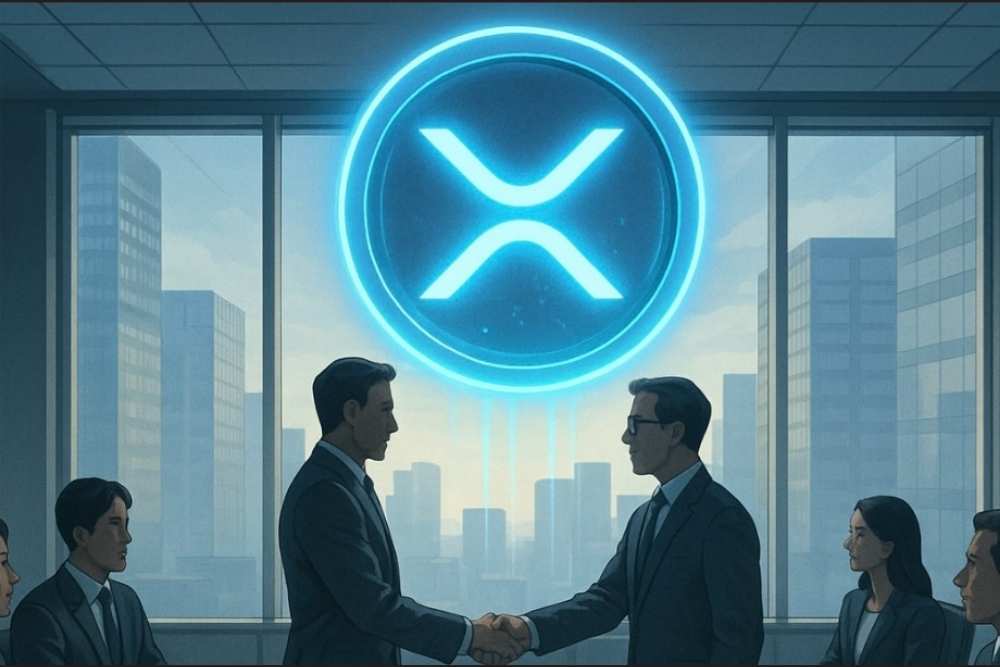
Global payment systems are entering a decisive phase of modernization as financial institutions race to upgrade settlement infrastructure for real-time, cross-border efficiency. Central banks and private networks are no longer building in isolation; instead, they are aligning toward shared messaging standards and interoperable frameworks that can support instant value transfer at scale.
SMQKE highlights a set of institutional documents and industry materials that challenge the long-held claim that FedNow operates in complete isolation from digital asset ecosystems. His research focuses on how XRP, Ripple’s regulatory positioning, and global payment standards intersect within a broader financial architecture that is rapidly converging.
The Rise of ISO 20022 as the Global Standard
Financial infrastructure now increasingly revolves around ISO 20022, a unified messaging standard that replaces fragmented legacy protocols with structured, data-rich financial communication. Major systems such as SWIFT, Fedwire, CHIPS, and FedNow now adopt or align with this framework to improve interoperability, compliance, and transaction transparency.
FedNow, launched by the U.S. Federal Reserve in 2023, processes real-time domestic payments using modernized messaging rails. While it does not directly interact with cryptocurrencies, it operates within the same global shift toward standardized, high-speed settlement systems that also underpin blockchain interoperability discussions.
“FedNow has zero to do with XRP.”🚫
This was a prominent narrative in the past.
Now, the truth has been revealed.💯
The answer was always in the documents.
The reality: XRP has plenty to do with FedNow. ✅
Documented below. 📝👇 https://t.co/vMDg8YvfSA pic.twitter.com/8RCoSL8JXD
— SMQKE (@SMQKEDQG) April 10, 2026
Ripple’s Expanding Regulatory Footprint
SMQKE’s referenced materials also highlight Ripple’s deepening institutional integration. The company has secured conditional approval for a national trust bank charter and continues to pursue a Federal Reserve Master Account, which would grant direct access to FedWire and potentially FedNow infrastructure under strict regulatory oversight.
This development places Ripple closer to traditional financial plumbing than at any point in its history. It strengthens the argument that the company no longer operates solely as a blockchain startup but increasingly functions within regulated banking and payments infrastructure.
The documents also point to Ripple’s broader roadmap, which includes tokenized assets, regulated XRP investment products, and enhanced programmability on the XRP Ledger. These initiatives position the ecosystem for deeper institutional adoption.
XRP and the Interoperability Thesis
SMQKE frames XRP’s relevance not as direct integration with FedNow, but as structural compatibility within a shared financial ecosystem. XRP functions as a bridge asset designed to support liquidity movement between disparate systems, particularly in cross-border settlement contexts.
We are on X, follow us to connect with us :- @TimesTabloid1
— TimesTabloid (@TimesTabloid1) June 15, 2025
This design aligns with a financial environment that prioritizes interoperability over siloed networks. As payment systems modernize, they increasingly rely on standardized messaging and shared compliance frameworks that allow external liquidity systems to interact more efficiently.
Convergence of Traditional and Blockchain Systems
Rather than replacing existing infrastructure, blockchain-based payment systems and central bank rails appear to evolve in parallel. FedNow, SWIFT modernization efforts, and Ripple’s institutional strategy all reflect a broader convergence around real-time settlement and standardized financial communication.
In this context, XRP does not sit inside FedNow, but it exists within an adjacent layer of financial infrastructure that increasingly shares technical and regulatory alignment with it.
A Shifting Financial Architecture
The emerging financial system emphasizes integration, compliance, and interoperability across both traditional and blockchain-based networks. SMQKE’s analysis underscores this shift, arguing that the significance of XRP lies in its ability to function within this interconnected architecture rather than operate in isolation.
As global payment systems continue to converge, the line between legacy finance and digital asset infrastructure continues to narrow.
Disclaimer: This content is meant to inform and should not be considered financial advice. The views expressed in this article may include the author’s personal opinions and do not represent Times Tabloid’s opinion. Readers are urged to do in-depth research before making any investment decisions. Any action taken by the reader is strictly at their own risk. Times Tabloid is not responsible for any financial losses.
Follow us on Twitter, Facebook, Telegram, and Google News

