


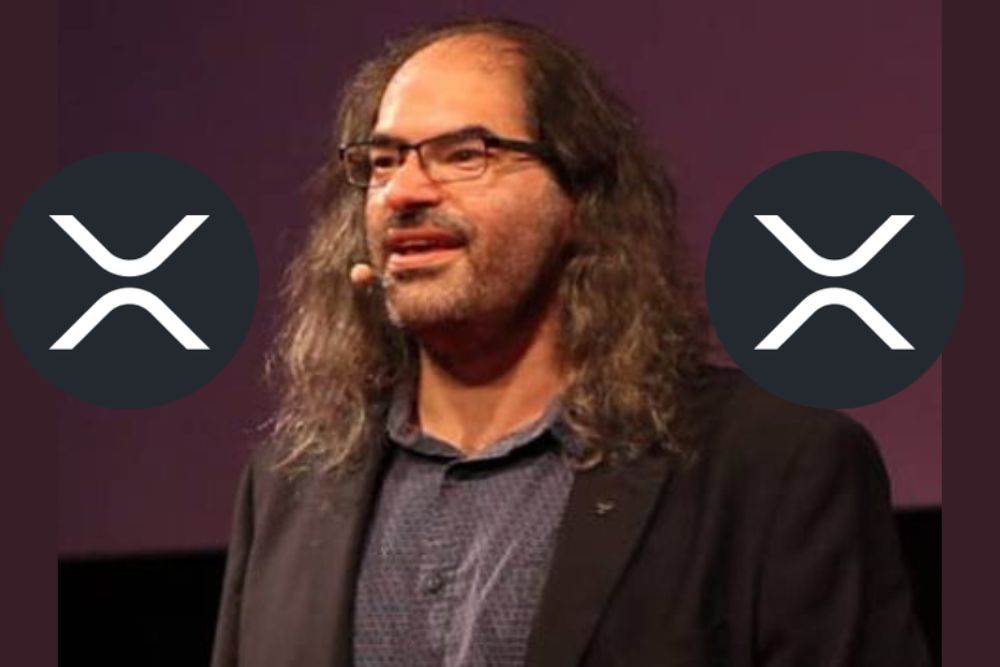
The debate around XRP’s price has followed the asset for years. Many still assume that a low unit price supports efficiency. That belief persists despite repeated explanations from Ripple leadership. In 2017, David Schwartz, the former CTO of Ripple, addressed this directly.
In 2025, with institutional usage expanding and CBDC projects moving from testing to deployment, that explanation carries greater weight. Ripple Bull Winkle (@RipBullWinkle) recently resurfaced Schwartz’s comments to highlight how little the core logic has changed.
David Schwartz explained in 2017 why $XRP can't stay cheap:
"Higher prices make payments CHEAPER because transaction fees are measured in XRP, not USD."
In 2025, with real institutional adoption and CBDCs going live, this logic applies even MORE.
The math doesn't support XRP… pic.twitter.com/TrhMTSbJs6
— Ripple Bull Winkle | Crypto Researcher 🚀🚨 (@RipBullWinkle) January 6, 2026
Schwartz’s Core Argument on Price and Cost
Schwartz explained that XRP “can’t be dirt cheap” if it is used for serious value transfer. If XRP trades at $1, a $1 million transfer requires 1 million XRP. If the asset trades at $1 million, that same transfer requires 1 XRP. The dollar value stays the same, but the market impact does not.
He followed that with a key clarification. “Higher prices make payments cheaper.” Fees are measured in XRP, not USD. When the unit price rises, the absolute cost of moving value falls in real terms. Liquidity improves, slippage drops, while execution becomes cleaner.
This is not a theory. Schwartz pointed to Bitcoin as a live example. When BTC traded at $300, large purchases moved the market too aggressively. At higher prices, the same dollar transaction became more practical. XRP was designed with this dynamic in mind.
Institutional Flow Changes the Equation
Bull Winkle connected this logic to present conditions. In 2025, XRP is more than just a speculative asset. Financial institutions now test and deploy blockchain-based settlement rails. These systems prioritize predictability, depth, and efficiency.
CBDCs amplify this requirement. A central bank does not move small retail sums. It clears large pools of liquidity. Low-priced assets require massive unit counts to settle those flows. That creates friction. Higher unit prices reduce that friction by design.
We are on X, follow us to connect with us :- @TimesTabloid1
— TimesTabloid (@TimesTabloid1) June 15, 2025
Schwartz also clarified in 2017 that institutional XRP sales occur off-market and often include lockups. Those transactions do not directly affect public trading. This structure supports stability while enabling utility-driven distribution.
What This Means for XRP’s Price Path
As usage scales, the network must support higher throughput with minimal market disruption. A higher XRP price supports that outcome. It allows large transfers with fewer units. It reduces on-ledger congestion. It lowers effective fees.
This principle follows from settlement mechanics. Bull Winkle’s point rests on timing, not invention. The conditions Schwartz described now exist in practice. CBDC pilots, institutional corridors, and on-demand liquidity all reinforce the same idea.
Disclaimer: This content is meant to inform and should not be considered financial advice. The views expressed in this article may include the author’s personal opinions and do not represent Times Tabloid’s opinion. Readers are advised to conduct thorough research before making any investment decisions. Any action taken by the reader is strictly at their own risk. Times Tabloid is not responsible for any financial losses.
Follow us on X, Facebook, Telegram, and Google News

