

Investors often rely on market capitalization to compare cryptocurrencies, assuming a higher number signals stability, adoption, or growth potential. However, for utility-focused digital assets, market cap can be misleading. The real measure of value lies in transaction throughput, liquidity dynamics, and practical network usage—factors that traditional valuation metrics fail to capture.
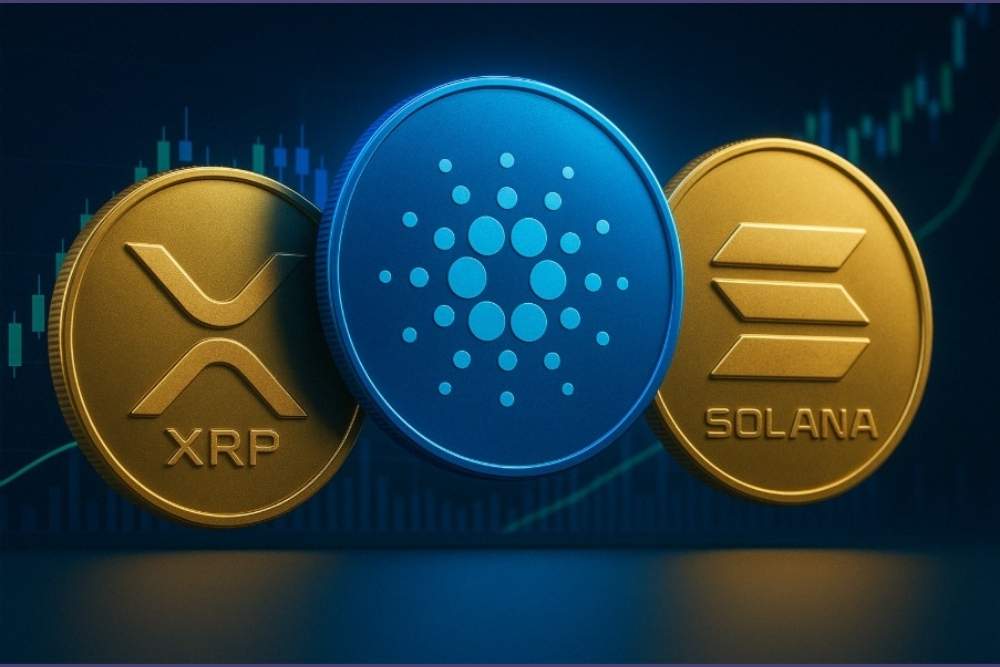
Crypto commentator Time Traveler recently highlighted this point in a post on X, emphasizing XRP, Solana (SOL), and Cardano (ADA). He argued that market cap does not accurately reflect the capacity or resilience of these blockchain networks.
According to Time Traveler, their liquidity pools rotate dynamically, enabling far more throughput than market capitalization suggests, and conventional metrics fail to account for this continuous flow of value.
Again, for those of you who are obviously new to understanding XRP, SOL, and ADA.
MARKET CAP DOES NOT MATTER for these 3 crypto utilities.
Market cap implies there is a CAP.
It's in the name.
There is no market CAP for a liquidity because the pool rotates. Now can these 3…— 𝚃𝚒𝚖𝚎 𝚃𝚛𝚊𝚟𝚎𝚕𝚎𝚛 (@Traveler2236) March 9, 2026
Market Cap vs. Network Utility
Market capitalization multiplies circulating supply by price, providing a snapshot of nominal value. While useful for ranking assets, it implies a fixed “cap,” which misrepresents the nature of liquidity in modern blockchain networks. XRP, Solana, and Cardano operate in ways that make this metric less relevant.
Their tokens move constantly through transactions, staking, and decentralized finance applications, meaning the actual usable liquidity far exceeds what market cap alone reflects.
Time Traveler stresses that evaluating these networks requires understanding the difference between static valuation and dynamic liquidity. A lower market cap does not equate to limitations; it simply indicates the current market price multiplied by circulating supply, not the true capacity of the network to process vast amounts of value.
Capacity Under High-Volume Scenarios
A key consideration is whether these networks can handle extreme transactional volume. Time Traveler asked whether XRP, Solana, and Cardano could manage $500+ trillion in global value circulation.
We are on X, follow us to connect with us :- @TimesTabloid1
— TimesTabloid (@TimesTabloid1) June 15, 2025
According to his analysis, XRP demonstrates the strongest structural resilience, able to sustain massive liquidity flows efficiently. Solana and Cardano, despite their innovative features, could face challenges under such volume, highlighting that scalability and throughput matter more than headline market capitalization.
Implications for Investors
Time Traveler’s perspective urges investors to look beyond market cap when assessing blockchain networks. Focusing on throughput, liquidity rotation, and real-world utility provides a clearer picture of long-term potential and risk. Investors who understand these dynamics can better differentiate between truly scalable networks and those that may struggle under higher transactional demand.
In conclusion, Time Traveler’s insights reinforce that market cap is a static snapshot, whereas blockchain utility operates dynamically. For XRP, Solana, and Cardano, understanding liquidity flow, network capacity, and adoption potential matters far more than a simple market capitalization figure.
Those who grasp this nuance gain an edge in evaluating which networks can thrive as digital asset adoption continues to expand.
Disclaimer: This content is meant to inform and should not be considered financial advice. The views expressed in this article may include the author’s personal opinions and do not represent Times Tabloid’s opinion. Readers are urged to do in-depth research before making any investment decisions. Any action taken by the reader is strictly at their own risk. Times Tabloid is not responsible for any financial losses.
Follow us on Twitter, Facebook, Telegram, and Google News

