


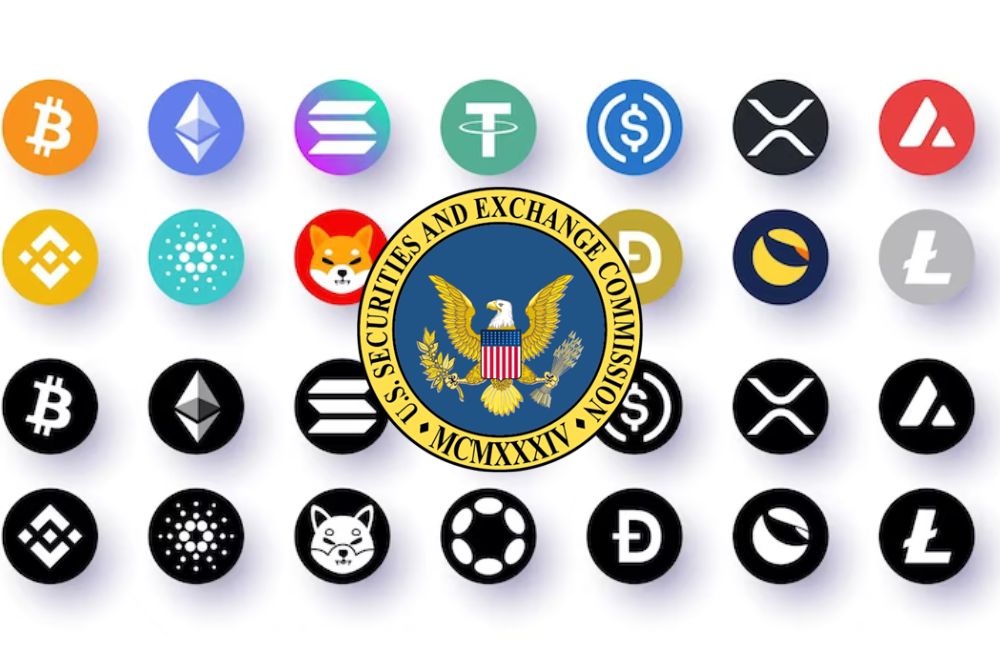
For years, the crypto industry operated under a cloud of uncertainty. Investors, exchanges, and blockchain companies faced one persistent question: which digital assets would regulators treat as securities, and which would escape that label? Few tokens stood closer to that battle than XRP, especially after Ripple’s long legal fight with the U.S. Securities and Exchange Commission.
That uncertainty is now changing in a meaningful way. BankXRP recently highlighted fresh SEC interpretive guidance showing that XRP and several other major cryptocurrencies now fall under a formal “digital commodities” category. The move marks one of the strongest regulatory shifts the industry has seen in years and signals a major policy reset from enforcement toward clarity.
XRP Officially Joins the Digital Commodities Category
On March 17, 2026, the SEC and the Commodity Futures Trading Commission issued joint interpretive guidance explaining how federal securities laws apply to crypto assets. The framework introduced a five-part token taxonomy that separates digital assets into digital commodities, digital collectibles, digital tools, stablecoins, and digital securities.
The SEC has finally shifted the goalposts. After years of relentless lawsuits against the broader industry and specifically targeting $XRP their latest staff guidance now formally categorizes these assets as "Digital Commodities."
Reality is finally catching up.
The SEC now… pic.twitter.com/C42dFpsdUg
— 𝗕𝗮𝗻𝗸XRP (@BankXRP) April 26, 2026
Within that structure, regulators identified 16 major assets as digital commodities, including XRP, Bitcoin, Ethereum, Solana, Cardano, Chainlink, Stellar, Aptos, Avalanche, Bitcoin Cash, Dogecoin, Hedera, Litecoin, Polkadot, Tezos, and Shiba Inu.
This classification matters because digital commodities fall primarily under CFTC oversight rather than traditional SEC securities enforcement. It also replaces much of the uncertainty created by the SEC’s older 2019 framework and years of aggressive lawsuits across the industry.
Why This Matters for XRP
For XRP, the development carries both legal and symbolic importance. Judge Analisa Torres’ 2023 ruling already established that XRP itself is not inherently a security in secondary market sales. However, the new 2026 framework goes further by explicitly placing XRP inside a formal digital commodity classification.
The distinction gives clearer guidance to exchanges, institutional investors, and potential ETF issuers. It also improves certainty on staking, token usage, and wider market participation.
We are on X, follow us to connect with us :- @TimesTabloid1
— TimesTabloid (@TimesTabloid1) June 15, 2025
Many analysts believe this reduces one of the biggest barriers that held XRP back for years: regulatory hesitation. With clearer rules now in place, institutions may feel more comfortable expanding exposure to XRP and other large-cap digital assets.
A Shift Away From Regulation by Enforcement
BankXRP described the development as the SEC finally “shifting the goalposts,” and much of the market agrees. Under SEC Chair Paul Atkins, the agency has signaled a move away from regulation by enforcement and toward formal market structure rules.
Atkins reinforced that shift by stating that the SEC is no longer the “securities and everything commission,” reflecting a broader policy change in Washington.
For XRP holders, this moment feels long overdue. After years of legal battles and uncertainty, formal recognition as a digital commodity indicates regulatory reality is finally catching up with arguments long made by much of the XRP community.
Disclaimer: This content is meant to inform and should not be considered financial advice. The views expressed in this article may include the author’s personal opinions and do not represent Times Tabloid’s opinion. Readers are urged to do in-depth research before making any investment decisions. Any action taken by the reader is strictly at their own risk. Times Tabloid is not responsible for any financial losses.
Follow us on Twitter, Facebook, Telegram, and Google News

