


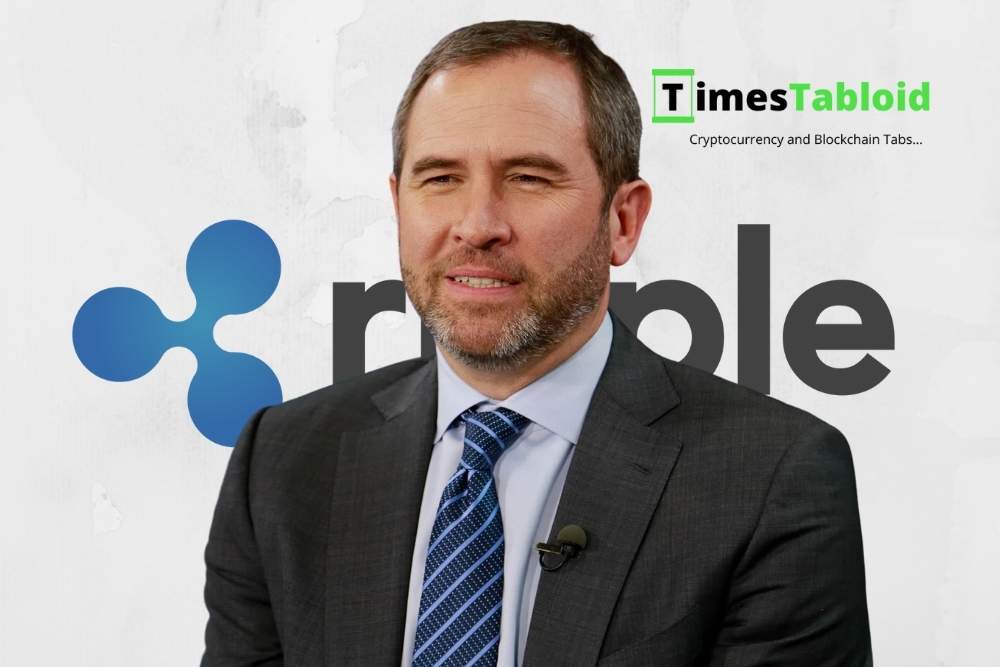
Ripple CEO Brad Garlinghouse has once again reignited confidence in XRP’s growing role within global finance. Speaking at an October 2025 IMF panel alongside Ross Leckow, the IMF Deputy General Counsel, the Ripple CEO confirmed that his 2024 prediction about banks adopting XRP for payments had come into being.
The moment marked a milestone in Ripple’s long campaign to bring blockchain technology into mainstream banking.
Garlinghouse’s 2024 Prediction Comes True
Garlinghouse recalled his remarks at the previous year’s Singapore FinTech Festival, saying, “Within a year, I predicted that financial institutions like banks would be using XRP in their payment flows. It turns out I was right.”
The statement, originally shared by ALLINCRYPTO on X, quickly spread across the crypto community. It highlights how Ripple’s On-Demand Liquidity (ODL) solution, which uses XRP as a bridge currency, has transitioned from testing phases to real-world usage.
🚨 @Ripple CEO Brad Garlinghouse in a talk with the IMF Deputy General Counsel Ross Leckow:"within a year, I predicted that financial institutions like banks would be using $XRP in their payment flows.""It turns out i was right."$RLUSD pic.twitter.com/voaMpnb65v
— ALLINCRYPTO (@RealAllinCrypto) October 29, 2025
Banks Now Using XRP for Real Payments
In 2025, reports indicate that several banks and financial institutions have adopted Ripple’s technology for cross-border payments. SBI Remit, a subsidiary of Japan’s SBI Holdings, is using XRP to enable faster and more affordable remittances across Asia.
Similarly, Santander continues to employ RippleNet to power international transactions with improved settlement times and reduced costs.
These live implementations confirm Garlinghouse’s claim. What began as a prediction in 2024 has become a demonstrable reality, with XRP now operating within the payment flows of regulated financial institutions.
The Next Phase: Banks’ Custodying Digital Assets
Garlinghouse didn’t stop at confirming his earlier success. He also looked ahead, predicting another industry shift that could redefine banks’ role in crypto. He said, “One of the things that will surprise us a year from now is that banks will be custodying digital assets directly.”
We are on X, follow us to connect with us :- @TimesTabloid1
— TimesTabloid (@TimesTabloid1) June 15, 2025
He emphasized that this move would likely begin in ASEAN markets, noting, “Banks are profit-motivated, and with regulatory clarity, they will lean into these markets.” According to Garlinghouse, the combination of clearer rules and the profitability of digital asset services will drive rapid institutional adoption.
Regulatory Clarity and Market Motivation
Clear regulations are the main factor giving banks the confidence to engage with digital assets. The IMF panel discussion highlighted that regulatory frameworks in Asia and Europe are becoming more mature, enabling financial institutions to safely explore areas such as custody, settlement, and blockchain integration.
Garlinghouse acknowledged this shift, explaining that progressive regions with strong oversight — particularly in Southeast Asia — will likely lead the next phase of adoption.
Ripple’s Broader Vision for 2026 and Beyond
Ripple continues to position XRP and its RLUSD stablecoin at the center of real-time liquidity solutions. With banks already settling cross-border transactions through ODL and preparing for digital asset custody, the company’s 2026 roadmap appears aligned with Garlinghouse’s latest forecast.
What seemed ambitious a year ago is now factual proof of blockchain’s institutional breakthrough. As Garlinghouse reminded the IMF audience, “It turns out I was right” — and the global banking sector may soon prove him right again.
Disclaimer: This content is meant to inform and should not be considered financial advice. The views expressed in this article may include the author’s personal opinions and do not represent Times Tabloid’s opinion. Readers are advised to conduct thorough research before making any investment decisions. Any action taken by the reader is strictly at their own risk. Times Tabloid is not responsible for any financial losses.
Follow us on Twitter, Facebook, Telegram, and Google News

