
Global payment infrastructure now evolves through modular integration rather than full system replacement. Banks and financial networks increasingly separate messaging, compliance, and settlement into distinct layers. This structure allows institutions to upgrade liquidity and settlement capabilities without disrupting legacy systems that still process trillions in daily transactions.
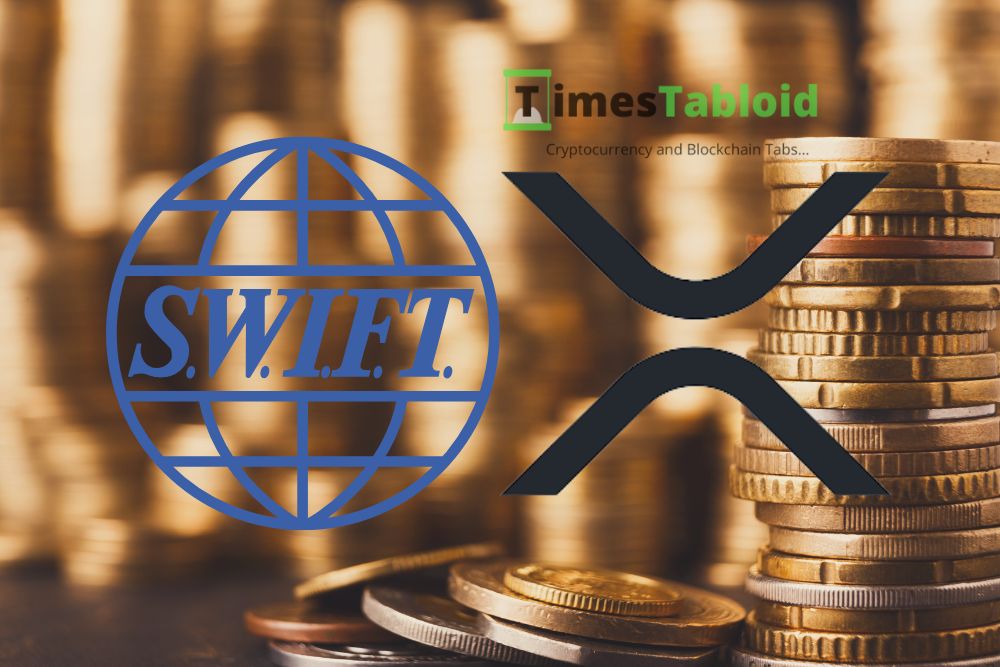
According to a post by SMQKE, SWIFT does not require a direct partnership with Ripple to interact with XRP-based settlement pathways. The analysis argues that SWIFT-compatible payment messages can already flow into RippleNet through API bridges created by enterprise middleware providers such as SAP and Temenos. This design enables indirect interoperability between SWIFT messaging and blockchain settlement rails.
SWIFT as a Messaging Layer
SWIFT primarily operates as a financial messaging network rather than a settlement system. It transmits standardized instructions, such as MT103 messages, between banks to coordinate international payments. These messages carry transaction details, while actual value transfer typically occurs through correspondent banking relationships.
This separation allows SWIFT to function as a communication backbone while leaving liquidity execution to external settlement systems. As a result, alternative settlement technologies can integrate without altering SWIFT’s core messaging infrastructure.
‼️A PUBLIC SWIFT-RIPPLE PARTNERSHIP IS NOT NEEDED FOR SWIFT TO USE XRP‼️
“RippleNet receives same MT type
messaging via API bridge setup by SAP, Temenos etc. This happens independent of SWIFT.”💯“No partnership between SWIFT and Ripple required.”😏💨
SWIFT = Real-Time Payment… https://t.co/JXECWmvMrQ pic.twitter.com/1P8ydKqX1N
— SMQKE (@SMQKEDQG) March 30, 2026
API Bridges and Enterprise Middleware Integration
Enterprise technology providers play a central role in connecting legacy banking systems with modern financial networks. Platforms like SAP and Temenos build API-based bridges that translate banking messages into formats usable by external systems, including blockchain networks.
Through this integration layer, RippleNet can receive SWIFT-formatted messages without requiring changes to SWIFT’s internal architecture. The API bridge simply routes and interprets data between systems, enabling interoperability across different financial technologies.
XRP as a Settlement and Liquidity Layer
Within this framework, XRP functions as a real-time liquidity asset rather than a messaging tool. SWIFT handles communication between financial institutions, while XRP facilitates value transfer between endpoints.
This separation aligns with the broader industry shift toward decoupled financial stacks, where messaging, compliance, and settlement operate independently. By isolating liquidity from messaging, institutions can improve settlement speed and reduce reliance on pre-funded accounts.
We are on X, follow us to connect with us :- @TimesTabloid1
— TimesTabloid (@TimesTabloid1) June 15, 2025
SWIFT GPI and Evolving Payment Infrastructure
SWIFT’s Global Payments Innovation (GPI) initiative already improves payment tracking, speed, and transparency across its network. However, GPI still relies on traditional correspondent banking systems for final settlement.
Emerging integration models suggest that external liquidity networks could complement GPI by handling settlement independently while SWIFT continues to manage messaging and tracking. This hybrid structure enhances efficiency without requiring the replacement of existing infrastructure.
Indirect Adoption Through Existing Banking Systems
The post also highlights a key point: banks may access blockchain-based settlement tools without any public SWIFT-Ripple partnership. Instead, integration can occur quietly through middleware vendors that already connect financial institutions to multiple payment systems.
This indirect pathway allows institutions to adopt new settlement technologies without operational disruption or public-facing structural changes. It also reflects how financial modernization typically occurs through incremental backend upgrades rather than headline partnerships.
A Modular Future for Cross-Border Payments
Global payment systems increasingly operate as layered architectures. Messaging networks, compliance engines, and liquidity rails now function independently while connecting through standardized APIs.
In this model, XRP can serve as a backend settlement layer within a broader banking infrastructure. SWIFT continues to coordinate messaging, while external systems manage liquidity execution, creating a flexible and interoperable global payment ecosystem.
Disclaimer: This content is meant to inform and should not be considered financial advice. The views expressed in this article may include the author’s personal opinions and do not represent Times Tabloid’s opinion. Readers are urged to do in-depth research before making any investment decisions. Any action taken by the reader is strictly at their own risk. Times Tabloid is not responsible for any financial losses.
Follow us on Twitter, Facebook, Telegram, and Google News

