


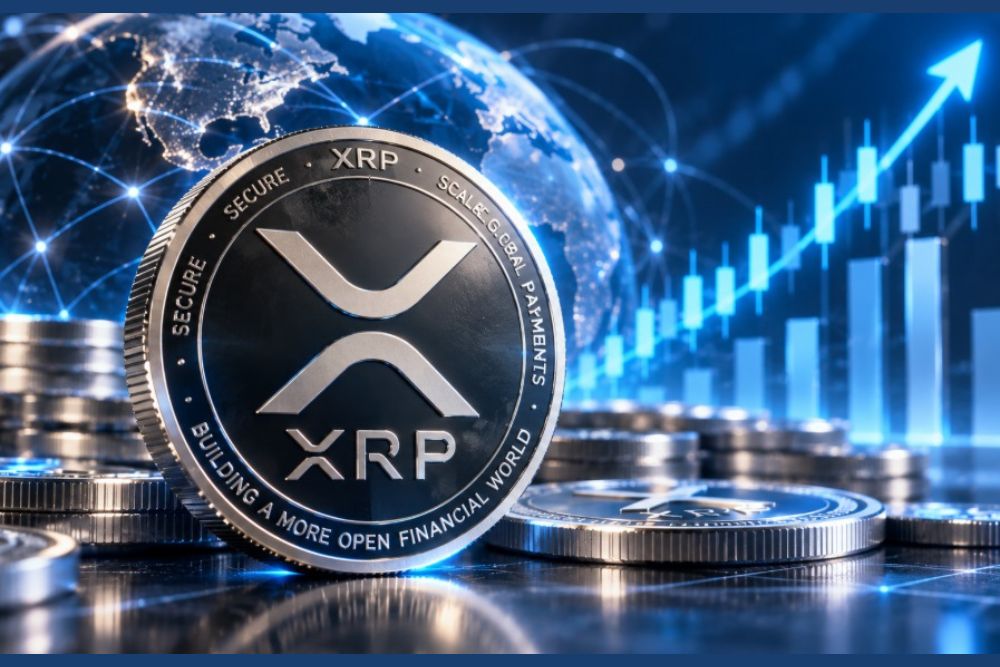
Crypto enthusiast Mason Versluis has identified two features of XRP that he believes could support its role in a future tokenized financial system: its “X” designation and its 100 billion maximum supply.
In a video shared on X, Versluis clarified that developers made both choices deliberately and that they could support XRP’s use in large-scale value transfers.
Versluis first examined the “X” in XRP and linked it to the ISO 4217 currency standard. He explained that ISO 4217 uses codes beginning with “X” for assets that do not represent the currency of a specific nation. He pointed to gold, which uses the XAU code, as an example.
Versluis said XRP’s “X” designation reflects an asset that does not belong to a particular country. He believes that characteristic could become important if financial markets continue moving toward tokenized assets and global digital settlement.
He suggested that participants in such a system could seek an asset that operates independently of any single national currency. Versluis described XRP as a potential liquidity asset and bridge currency that could connect different currencies and financial systems without direct ownership by one country.
The ISO 4217 designation, however, does not establish XRP’s intended future role or prove that its creators designed the asset specifically to handle trillions of dollars. Instead, the standard uses the “X” prefix for certain non-national monetary and financial assets.
$XRP Secrets You Didn’t Know pic.twitter.com/qtB39UEOwX
— MASON VERSLUIS (@MasonVersluis) October 5, 2026
Versluis Connects XRP’s Supply to Large-Scale Transfers
Versluis then turned to XRP’s 100 billion maximum supply. He stated that developers deliberately selected a larger supply because XRP could facilitate transactions involving very large amounts of value.
He acknowledged that the value of each token matters when determining how much value a network can transfer. Nevertheless, he maintained that a larger supply gives users greater flexibility when they conduct high-value transactions.
Versluis compared XRP with Bitcoin, which has a maximum supply of 21 million coins. He questioned why XRP’s developers chose a much larger supply instead of creating a scarcer asset similar to Bitcoin.
For Versluis, that difference represents a deliberate design choice. He emphasized that XRP does not rely on extreme scarcity and instead has a maximum supply of 100 billion tokens.
Versluis also addressed the portion of XRP that remains outside the freely circulating supply. He referenced Ripple’s holdings and locked supply before estimating that roughly 60 billion XRP effectively remains available. Escrow releases, holdings, and other supply factors can change the amount of XRP available in the market.
We are on X, follow us to connect with us :- @TimesTabloid1
— TimesTabloid (@TimesTabloid1) June 15, 2025
Versluis Responds to XRP Market Cap Criticism
An X user then challenged Versluis over XRP’s market capitalization and price. The commenter questioned how XRP could maintain a market capitalization near $96 billion while trading below $2 and asked Versluis to explain the valuation without relying on terms such as “manipulation” or future adoption.
Versluis responded with a simple market-cap calculation. He used 63 billion XRP and a $1.50 price to produce a market capitalization of approximately $94.5 billion.
He emphasized that market capitalization comes from basic mathematics and does not directly determine the price of each XRP. Instead, supply and demand influence the price that buyers and sellers accept in the market.
Versluis concluded that XRP’s roughly $1.50 price reflects what the market was willing to pay for each token at the time of his response.
Disclaimer: This content is meant to inform and should not be considered financial advice. The views expressed in this article may include the author’s personal opinions and do not represent Times Tabloid’s opinion. Readers are advised to conduct thorough research before making any investment decisions. Any action taken by the reader is strictly at their own risk. Times Tabloid is not responsible for any financial losses.
Follow us on X, Facebook, Telegram, and Google News

