


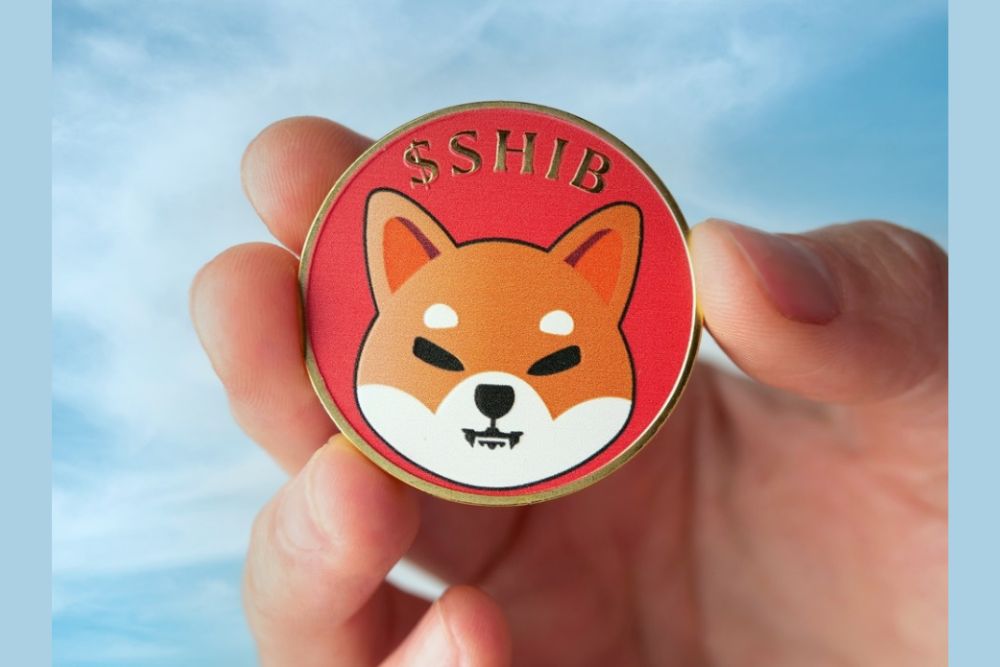
Concerns about Shiba Inu (SHIB) long-term viability resurfaced during the latest market pullback, with some commentators insisting that the asset is on a path toward complete collapse.
However, several key indicators, including trading activity, large-holder behaviour, and regulatory developments, offer a more grounded picture. The available data shows that SHIB remains actively traded and continues to attract interest from major investors, undermining the notion that it is approaching zero.
Price Weakness Fuels Renewed Doubts
SHIB has struggled to maintain momentum after losing the $0.00001 benchmark, a level that previously served as short-term support. The token briefly rebounded to approximately $0.00001022 last week but quickly fell back, touching $0.0000086 before edging up to around $0.00000898.
These movements revived recurring claims that the asset is on the verge of becoming worthless, claims that tend to surface whenever Shiba Inu experiences a sharp decline.
Despite these fluctuations, SHIB maintains a multi-billion-dollar market capitalization. Assets of this size with consistent liquidity do not simply disappear, even during extended downturns. The continued participation of major exchanges supports this point.
Trading Activity Remains Substantial
Current volume levels contradict the idea that Shiba Inu is losing relevance. CoinMarketCap data shows that SHIB’s 24-hour trading volume increased by more than 5%, reaching approximately $145 million. Significant volumes were recorded across leading exchanges such as Binance, KuCoin, OKX, Upbit, and Coinbase.
In addition, SHIB has spent several weeks trading within a narrow range between $0.000009 and $0.000010. This type of consolidation often signals the market is preparing for a decisive move, although the direction of that move remains uncertain.
Behaviour from major holders offers another important signal. If investors with substantial positions believed SHIB was nearing failure, exchange inflows would rise as they moved funds to sell. Current on-chain data shows the opposite.
CryptoQuant reports that the amount of SHIB held on exchanges has continued to decline, dropping from roughly 82.03 trillion tokens at the beginning of the month to about 81.77 trillion tokens. This decrease suggests that holders are either withdrawing their tokens for long-term storage or simply maintaining their positions rather than preparing for mass liquidation.
Analysts Expect a Potential Upside
Several analysts maintain a positive outlook on SHIB’s medium-term performance. TradingView analyst Kledji Cuni projects that the token could experience a significant rally, estimating gains of 100% to over 500%. His model points to the possibility of SHIB reaching levels near $0.0000420 if market conditions align.
Additional market observers, including Eunice Wong and Himanshu Maradiya of the CIFDAQ Blockchain Ecosystem, anticipate that SHIB may trade at higher valuations in the coming months, suggesting the token’s outlook is more complex than its critics imply.
We are on X, follow us to connect with us :- @TimesTabloid1
— TimesTabloid (@TimesTabloid1) June 15, 2025
Ecosystem and Regulatory Developments Strengthen SHIB’s Standing
Positive updates from the Shiba Inu team have also helped counter negative sentiment. The project recently teased an upcoming integration with Bitget Wallet, which has prompted speculation about new use-case expansions.
Shiba Inu (SHIB) also secured a place on Japan’s “green list,” a regulatory category reserved for digital assets that meet the country’s approval standards, placing it alongside major cryptocurrencies such as Bitcoin and Ethereum.
Growing discussions around a potential SHIB-based ETF have further fueled interest. Although no issuer has submitted a formal application, Grayscale’s recent confirmation that SHIB fits within the SEC’s Generic Listing Standard has encouraged speculation that an ETF could eventually emerge.
While Shiba Inu is not showing strong upward momentum, the available evidence does not support the claim that the token is approaching zero. Its main challenge is limited near-term catalysts, which could lead to continued sideways movement. However, active trading, declining exchange reserves, and sustained community and institutional interest suggest that SHIB’s position in the market remains stable rather than deteriorating.
Disclaimer: This content is meant to inform and should not be considered financial advice. The views expressed in this article may include the author’s personal opinions and do not represent Times Tabloid’s opinion. Readers are advised to conduct thorough research before making any investment decisions. Any action taken by the reader is strictly at their own risk. Times Tabloid is not responsible for any financial losses.
Follow us on X, Facebook, Telegram, and Google News

