

The cryptocurrency industry has entered a new phase in which institutional strategies increasingly extend beyond simple exposure to digital assets. While exchange-traded funds (ETFs) have become one of the most prominent gateways connecting traditional finance with the crypto market, many analysts now believe the real transformation lies deeper within blockchain infrastructure itself.
As financial institutions explore the technology’s broader capabilities, the conversation has shifted toward how blockchains could reshape the architecture of global financial markets.
Growing Speculation Around BlackRock and XRP
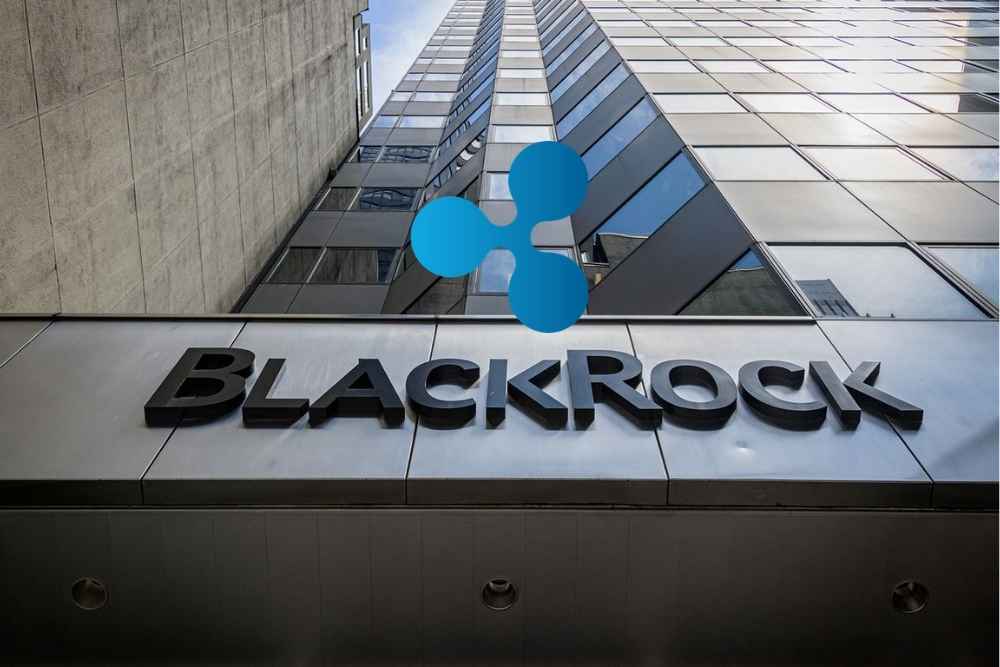
Much of the recent speculation centers on BlackRock, the world’s largest asset manager, and the possibility of an XRP-related financial product. Many investors have expected a potential XRP ETF following the massive institutional inflows seen after the launch of spot Bitcoin ETFs in the United States.
However, during a recent podcast discussion, fintech host Paul Barron and crypto analyst Abdullah “Abs” Nassif explored a different possibility. Nassif suggested that while an XRP ETF would likely attract strong institutional demand, BlackRock’s broader blockchain strategy might extend far beyond a single investment vehicle tied to the digital asset.
According to Nassif, if BlackRock had introduced a spot XRP product, it could have quickly become one of the largest institutional channels for XRP exposure. Yet the absence of such a product so far could indicate that larger initiatives may be developing behind the scenes.
Tokenization May Be the Larger Opportunity
Instead of focusing solely on ETFs, analysts increasingly point to tokenization as the real institutional opportunity. Tokenization involves converting traditional financial assets—such as stocks, bonds, real estate, and commodities—into digital tokens recorded on blockchain networks.
This process allows assets to move faster, settle more efficiently, and reach broader pools of investors. Tokenized assets can also enable fractional ownership, which allows investors to purchase smaller portions of high-value assets that were previously inaccessible.
Nassif referenced remarks from Matt Hougan, Chief Investment Officer at Bitwise Asset Management, who suggested that large asset managers may begin launching tokenized financial products on public blockchains within the next three to twelve months. If that shift occurs, institutions could issue digital versions of traditional assets directly on blockchain infrastructure.
In that scenario, networks such as the XRP Ledger could serve as platforms for issuing and transferring tokenized assets rather than simply acting as investment targets themselves.
We are on X, follow us to connect with us :- @TimesTabloid1
— TimesTabloid (@TimesTabloid1) June 15, 2025
Institutional Interest in Tokenization Continues to Grow
Industry executives have also acknowledged this growing momentum. Asheesh Birla, CEO of Evernorth and a longtime blockchain executive, recently addressed the topic during a discussion at an XRP-focused event in Australia.
Birla explained that the technology required for tokenizing assets has existed for years. According to him, regulatory uncertainty previously slowed institutional adoption. As regulatory clarity gradually improves, major financial institutions have begun exploring blockchain-based solutions more actively.
He cited firms such as Franklin Templeton and BlackRock as examples of traditional asset managers experimenting with tokenization initiatives.
A Long-Term Transformation for Financial Markets
Despite the growing momentum, Birla emphasized that blockchain adoption within global finance will likely unfold over a long timeline. He argued that meaningful technological transformation rarely occurs within one or two years.
Instead, he suggested that institutional blockchain adoption could follow a ten-year innovation cycle as financial firms integrate new infrastructure, adapt regulatory frameworks, and build market confidence.
While short-term price movements often dominate crypto headlines, broader adoption metrics reveal a deeper shift already underway. The rapid expansion of stablecoins, the emergence of tokenized financial products, and increasing institutional experimentation all suggest that blockchain-based finance is steadily gaining traction.
For XRP supporters, this evolving landscape indicates that the asset’s long-term role may extend far beyond an ETF, potentially positioning the XRP Ledger as a foundational platform for tokenized global finance.
Disclaimer: This content is meant to inform and should not be considered financial advice. The views expressed in this article may include the author’s personal opinions and do not represent Times Tabloid’s opinion. Readers are urged to do in-depth research before making any investment decisions. Any action taken by the reader is strictly at their own risk. Times Tabloid is not responsible for any financial losses.
Follow us on Twitter, Facebook, Telegram, and Google News

