
Global finance continues to shift toward a structure where value moves digitally, settlement happens faster, and traditional intermediaries lose exclusivity. Institutions now test blockchain systems not as experiments, but as infrastructure components that can support tokenized assets, liquidity management, and cross-border settlement. Within this evolving environment, XRP increasingly appears in discussions tied to institutional flows and real-world financial integration.
Crypto analyst CryptoSensei highlights a cluster of developments that he interprets as accelerating institutional engagement with XRP. His breakdown connects ETF activity, asset manager attention, and tokenization growth into a broader narrative of financial systems moving on-chain.
ETF Flows Signal Selective Institutional Demand
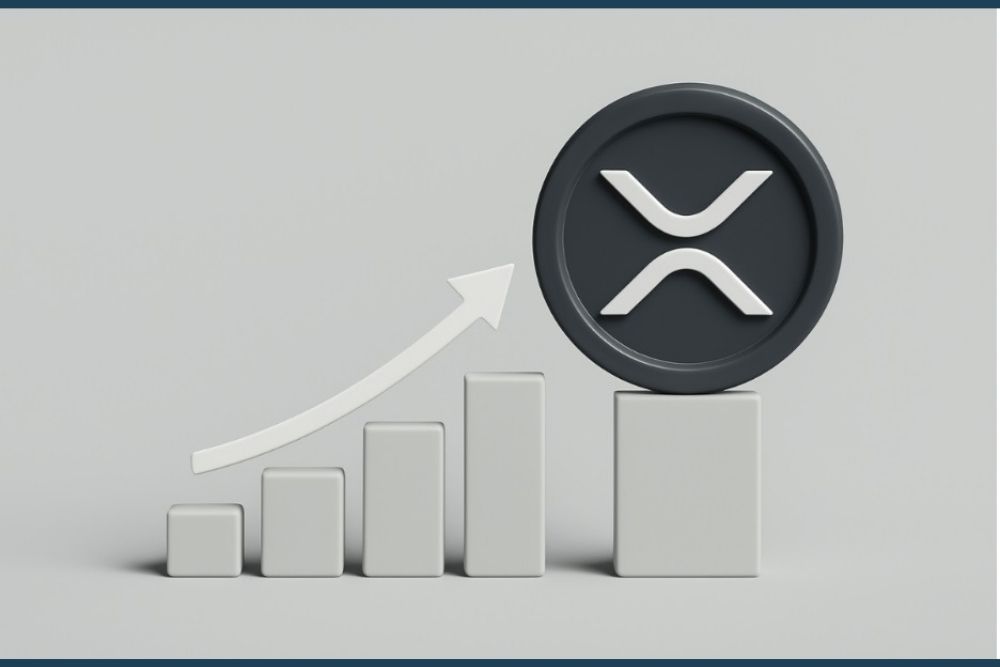
XRP spot ETF activity has become a key indicator of institutional sentiment. The post references approximately $1.4 million in inflows recorded on March 30, 2026, while Bitcoin and Ethereum experienced outflows during the same period. This divergence suggests that some institutional players have begun rotating selectively into XRP exposure rather than adopting broad crypto allocations.
However, the broader ETF landscape remains uneven. Monthly data showing approximately $31 million in net outflows indicates that institutional positioning continues to fluctuate. This mixed flow pattern reflects a market still in price discovery, where conviction builds unevenly across different assets and timeframes.
💡Breaking down what's happening with XRP.
➖ XRP spot ETF inflows
➖ Franklin Templeton discussing XRP
➖ Settlement assets becoming the focus
➖ XRPL tokenization, payments & finance
➖ Banks, stablecoins & payments converging
➖ Crypto regulation evolving (stablecoins,… pic.twitter.com/1YAroe7bdL— CryptoSensei (@Crypt0Senseii) March 31, 2026
Growing Attention From Major Asset Managers
Institutional discourse around XRP has also expanded beyond ETF flows. The post references engagement from Franklin Templeton, a major global asset manager that has increasingly explored tokenization and blockchain-based financial products.
This interest reflects a broader institutional trend. Traditional finance firms now evaluate blockchain networks as infrastructure layers capable of supporting settlement, liquidity optimization, and asset digitization. XRP benefits from this shift due to its positioning within cross-border payment and settlement frameworks.
XRPL and the Expansion of Tokenized Assets
The XRP Ledger (XRPL) continues to expand its footprint in real-world asset tokenization. By early 2026, tokenized assets on the network reportedly reached approximately $2.3 billion. This growth signals increased usage of XRPL for representing financial instruments such as bonds, funds, and other digitized assets.
As tokenization accelerates, financial institutions increasingly prioritize networks that can support efficiency, interoperability, and low-cost settlement. XRPL’s architecture positions it within that emerging demand curve.
We are on X, follow us to connect with us :- @TimesTabloid1
— TimesTabloid (@TimesTabloid1) June 15, 2025
Convergence of Banking, Stablecoins, and Blockchain Payments
CryptoSensei’s analysis also emphasizes a broader convergence across banking systems, stablecoins, and blockchain payment rails. Institutions now experiment with hybrid settlement models that combine traditional banking infrastructure with blockchain-based liquidity systems, including stablecoins like USDC across multiple networks.
This convergence does not yet represent a unified standard. Instead, it reflects a transitional phase where institutions test multiple settlement pathways to determine optimal efficiency, compliance, and scalability.
Regulation as the Defining Variable
Regulatory clarity continues to shape institutional participation. As digital asset frameworks evolve, institutions gain confidence to allocate capital toward blockchain-based settlement systems and tokenized financial products. This regulatory progression remains one of the strongest drivers of long-term adoption.
A Financial System Moving On-chain
CryptoSensei’s breakdown frames XRP within a broader structural transition rather than a standalone narrative. ETF flows, tokenization growth, and institutional exploration all point toward increasing blockchain integration in global finance.
If these trends persist, XRP will not remain peripheral to financial transformation. Instead, it will operate within the core infrastructure of an increasingly on-chain financial system.
Disclaimer: This content is meant to inform and should not be considered financial advice. The views expressed in this article may include the author’s personal opinions and do not represent Times Tabloid’s opinion. Readers are urged to do in-depth research before making any investment decisions. Any action taken by the reader is strictly at their own risk. Times Tabloid is not responsible for any financial losses.
Follow us on Twitter, Facebook, Telegram, and Google News

