

In an industry where perception often shapes reality, few digital assets have faced as much persistent mischaracterization as XRP. As institutional adoption rises and blockchain narratives evolve, misconceptions about control and decentralization continue to cloud informed discourse. A fresh clarification from one of the industry’s most prominent executives now challenges those long-standing assumptions head-on.
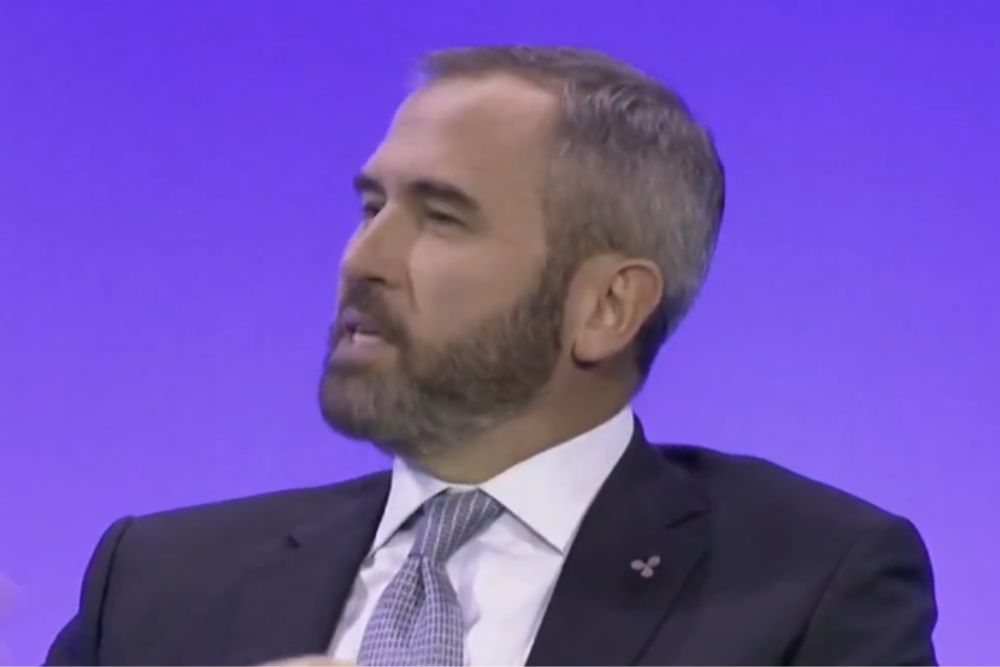
That clarification emerged through an X post by Xaif, featuring comments from Brad Garlinghouse, the CEO of Ripple. In the clip, Garlinghouse directly addressed the widespread claim that XRP has a central authority, firmly rejecting the notion with a rhetorical jab: “People will say things like, ‘Well, XRP has a CEO,’ and I’m like, who is it?” He quickly clarified, “Ripple has a CEO—that’s me,” drawing a clear boundary between the company and the asset.
XRP Operates Independently of Ripple
Garlinghouse stressed that XRP runs on its own on the XRP Ledger, an open-source, decentralized blockchain. He stated unequivocally, “Ripple does not control XRP. It is open source,” reinforcing a point that many in the crypto community continue to misunderstand.
🚀 Breaking: @bgarlinghouse drops truth bombs!$XRP isn't controlled by any CEO it's decentralized, open-source, with community validators holding the power. ✊️ pic.twitter.com/2gR3As2mh1
— Xaif Crypto🇮🇳|🇺🇸 (@Xaif_Crypto) March 15, 2026
He explained that developers and validators across the globe maintain the network, not Ripple. This decentralized structure ensures that no single entity can dictate the direction of the ledger, preserving its integrity and neutrality.
The 80% Consensus Rule
Garlinghouse also shed light on how governance works within the XRP Ledger. He explained that protocol changes require broad agreement, noting that “it takes 80% of the community approving those amendments.” This high consensus threshold ensures that decisions reflect collective agreement rather than centralized control.
To underscore this independence, he revealed, “There’ve been amendments passed that we opposed and they still passed.” This shows Ripple can’t go against what the network wants, even when it disagrees with proposed changes. Conversely, Ripple-backed initiatives only succeed when the broader community supports them.
We are on X, follow us to connect with us :- @TimesTabloid1
— TimesTabloid (@TimesTabloid1) June 15, 2025
A Diverse and Expanding Ecosystem
Garlinghouse highlighted the growing number of independent contributors building on XRP. He stated that “there are scores, if not a hundred other CEOs building around the XRP ecosystem,” pointing to a rapidly expanding network of companies and developers.
This diversity strengthens XRP’s decentralization, as innovation and development no longer rely on a single organization. Instead, the ecosystem evolves through collective participation, reinforcing its open-source foundation.
Reframing the Narrative
Garlinghouse concluded with a broader observation about misinformation in the crypto space. He noted that when people claim XRP has a CEO, “they’re not educated about what’s going on,” emphasizing the need for better awareness.
His remarks deliver a clear message: XRP operates as a decentralized, community-driven asset, independent of Ripple’s corporate structure. As the ecosystem matures, this distinction becomes increasingly important for investors, developers, and institutions seeking to understand its true value proposition.
Disclaimer: This content is meant to inform and should not be considered financial advice. The views expressed in this article may include the author’s personal opinions and do not represent Times Tabloid’s opinion. Readers are urged to do in-depth research before making any investment decisions. Any action taken by the reader is strictly at their own risk. Times Tabloid is not responsible for any financial losses.
Follow us on Twitter, Facebook, Telegram, and Google News

