


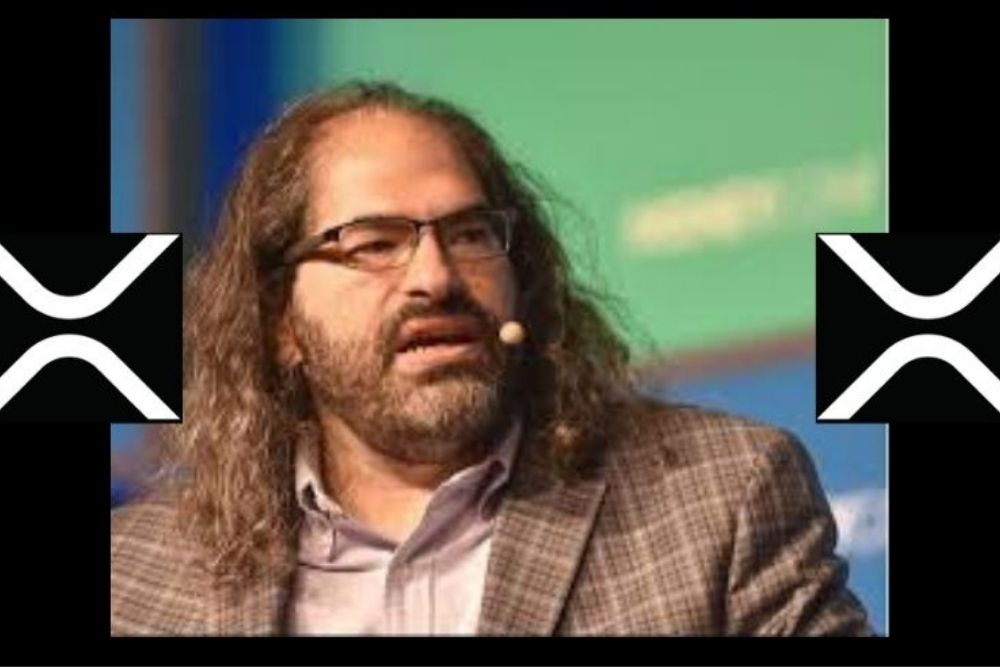
Ripple’s Chief Technology Officer, David Schwartz, has clarified that the XRP Ledger (XRPL) was not designed to increase the market value of XRP but to create a fast, reliable, and cost-efficient payment network.
His remarks were part of an ongoing discussion within the XRP community that began after the Balancer protocol hack, which sparked broader debates about blockchain design and network security.
The XRPL’s Design Philosophy
During the discussion, an XRP community member questioned Schwartz about whether mechanisms such as token burns or growing institutional demand, potentially from a future Grayscale XRP exchange-traded fund (ETF), could strengthen the XRPL’s long-term security and participation incentives.
In response, Schwartz outlined his view of the ledger’s core philosophy, emphasizing that the XRPL’s main function is utility, not speculation.
I think three things:
1) Greater adoption and use of XRPL will add value to XRP because of its privileged place on the ledger. It's the only asset with no counterparty that anyone can hold. It's jurisdictionless. It's favored by autobridging.
2) If what you really care about is…
— David 'JoelKatz' Schwartz (@JoelKatz) November 4, 2025
He explained that the value of XRP arises primarily from how widely the ledger is used, not from artificial efforts to raise its price. As more participants adopt the XRPL for payments and liquidity operations, XRP’s demand naturally grows because it functions as the bridge asset that connects various currencies on the network.
This position makes XRP distinct, as it operates without a central issuer, governing body, or national affiliation, unlike fiat-backed or corporate-backed tokens.
Schwartz on Price, Stability, and Functionality
Schwartz further noted that price fluctuations in the short and medium term are less dependent on the network’s utility and more on market stability, user trust, and the asset’s technical strengths. He emphasized four attributes that give XRP resilience, scarcity, fungibility, resistance to censorship, and ease of transfer and storage.
Importantly, he reiterated that the XRPL’s original developers, himself included, did not build the network with the intention of increasing XRP’s market price. The project was meant to establish a secure and efficient infrastructure for cross-border value exchange, not a speculative vehicle.
Schwartz acknowledged that other Ripple executives might interpret the network’s goals differently, but he made clear that this perspective reflects his own understanding of the technology’s purpose.
We are on X, follow us to connect with us :- @TimesTabloid1
— TimesTabloid (@TimesTabloid1) June 15, 2025
Community Debate Over Middlemen and Validators
Schwartz’s clarification came amid a related discussion about whether the XRPL depends on intermediaries. The conversation followed the Balancer hack, which resulted in more than $120 million in losses and reignited debate about the safety of smart contracts.
Some XRP proponents argued that the XRPL avoids such vulnerabilities because it relies on built-in features rather than external smart contracts. A community member known as xmoonkie asserted that this design eliminates the need for intermediaries, positioning XRPL ahead of other blockchains that rely heavily on complex contract layers.
Another participant, Dondropit, supported this argument, referencing Schwartz’s earlier comments that the XRPL prevents individuals from profiting through transaction fees, thereby maintaining a trustless and intermediary-free structure.
However, a critic countered that Ripple and its early founders benefited from XRP’s premine, suggesting that validators effectively act as middlemen similar to Bitcoin miners. Addressing this point, Schwartz clarified that validators on the XRPL function differently from miners.
They do not receive payments from users or determine which transactions to include. Instead, validators coordinate transaction ordering and ensure consensus integrity to prevent double-spending, operating as neutral participants rather than profit-seeking intermediaries.
Schwartz’s comments reinforce the notion that the XRP Ledger was built to serve as a functional payments network, not an investment tool. While XRP’s value may rise as adoption increases, its growth remains tied to practical usage rather than deliberate price engineering.
The discussion also highlights how Ripple’s technology distinguishes itself from smart contract-heavy systems by emphasizing efficiency, decentralization, and security.
Disclaimer: This content is meant to inform and should not be considered financial advice. The views expressed in this article may include the author’s personal opinions and do not represent Times Tabloid’s opinion. Readers are urged to do in-depth research before making any investment decisions. Any action taken by the reader is strictly at their own risk. Times Tabloid is not responsible for any financial losses.
Follow us on Twitter, Facebook, Telegram, and Google News

