

A quiet but powerful evolution is unfolding on the XRP Ledger (XRPL) — one that could redefine how financial institutions engage with blockchain technology. The race for institutional adoption has long centered on compliance, scalability, and trust.
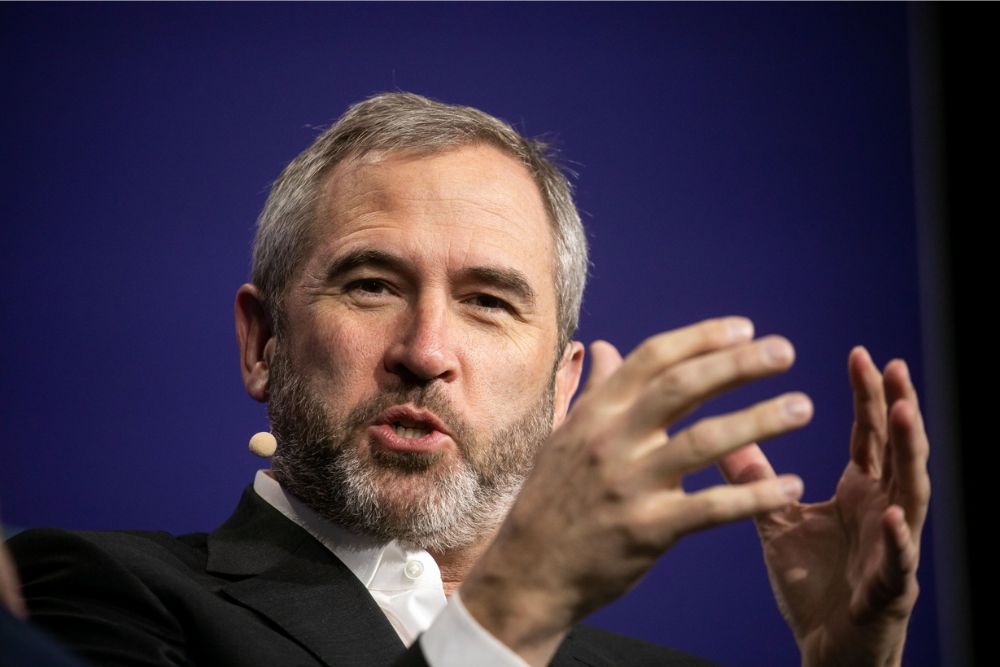
Yet, as Ripple’s CEO Brad Garlinghouse recently emphasized in a conversation referenced by XRPL contributor Vet, the key to unlocking this next phase of growth can be captured in a single word: privacy.
The Institutional Roadblock: Privacy and Compliance
For years, the biggest challenge for banks and major financial entities has been balancing blockchain transparency with confidentiality. Traditional institutions cannot afford to expose transaction hashes or customer data publicly. According to Vet’s recent post on X, Garlinghouse identified privacy as the primary obstacle preventing deeper institutional integration with the XRPL.
These developments align with Ripple’s current focus on features such as Decentralized Identifiers (DID), On-Chain Credentials, and the upcoming Permissioned Domain/DEX, which enable regulated participation while protecting institutional privacy.
These upgrades will enable organizations to verify identities and ensure compliance (such as KYC and AML) directly on-chain while keeping sensitive details encrypted.
I asked Brad here what's the path to get more institutional adoption on the XRP Ledger, so that institutions are comfortable with sharing tx hashes with us.
>He said privacy.
Fast forward it all makes sense and fits nicely together.
We passed many compliance amendments like… pic.twitter.com/OfTSBvATEH
— Vet 🏴☠️ (@Vet_X0) October 5, 2025
Building the Infrastructure: Tokenization and On-Chain Liquidity
The XRPL is also strengthening its foundation for asset tokenization and liquidity management. The introduction of Multi-Purpose Tokens (MPTs) allows issuers to tokenize real-world assets more efficiently by embedding metadata and regulatory attributes directly into the tokens. This makes them suitable for institutions that demand traceability and compliance readiness.
The XRPL’s hybrid DEX-AMM system combines a high-performance order book with automated liquidity pools, creating deep and efficient markets. This combination positions the XRPL as one of the few networks capable of supporting institutional-grade asset trading natively, without relying on external bridges or custodial solutions.
What’s Still Missing: Privacy Enhancements and On-Chain Credit
Despite its strong foundation, Vet noted that two major features are still pending before the XRPL reaches full institutional readiness: privacy protocols and lending/borrowing mechanics (XLS-66).
Zero-Knowledge Proof (ZKP) technology will enable private transactions while maintaining on-chain cryptographic verification. Beyond privacy, ZKPs also contribute to scalability through ZK rollups, which enable heavy computations to occur off-chain, while only verifying the proofs on-chain — thereby improving throughput without sacrificing security.
We are on X, follow us to connect with us :- @TimesTabloid1
— TimesTabloid (@TimesTabloid1) June 15, 2025
Meanwhile, XLS-66 aims to bring native lending and borrowing functionality to the XRPL. This would allow institutions to collateralize tokenized assets and borrow or lend in a fully compliant and privacy-preserving environment, a critical feature for building credit markets on the ledger.
The Final Piece: Smart Contracts as the Network’s “Glue”
Vet also highlighted the upcoming XLS-101 Smart Contracts as a pivotal element for XRPL’s next evolution. These smart contracts will serve as the connective tissue binding all the network’s features together — from tokenization and lending to compliance enforcement and automation.
Before XLS-101, the network will gain confidence through XLS-100 Smart Escrows and the introduction of WebAssembly (WASM), which will expand the XRPL’s scripting capabilities. Once established, these components will enable developers and institutions to deploy secure, modular applications directly on-chain.
Toward a Crescendo of Institutional Adoption
The roadmap Vet described points to a cohesive strategy where every layer of the XRPL — identity, tokenization, liquidity, privacy, and programmability — works in harmony. With these developments, Ripple and its partners are shaping a blockchain environment that can meet the rigorous demands of financial institutions worldwide.
As Vet concluded, the coming integration of privacy and smart contracts could create a “crescendo on-chain,” a moment where bottom-up innovation and top-down institutional participation finally converge on the XRP Ledger — unlocking its full potential as the backbone of compliant, global blockchain finance.
Disclaimer: This content is meant to inform and should not be considered financial advice. The views expressed in this article may include the author’s personal opinions and do not represent Times Tabloid’s opinion. Readers are urged to do in-depth research before making any investment decisions. Any action taken by the reader is strictly at their own risk. Times Tabloid is not responsible for any financial losses.
Follow us on Twitter, Facebook, Telegram, and Google News

