

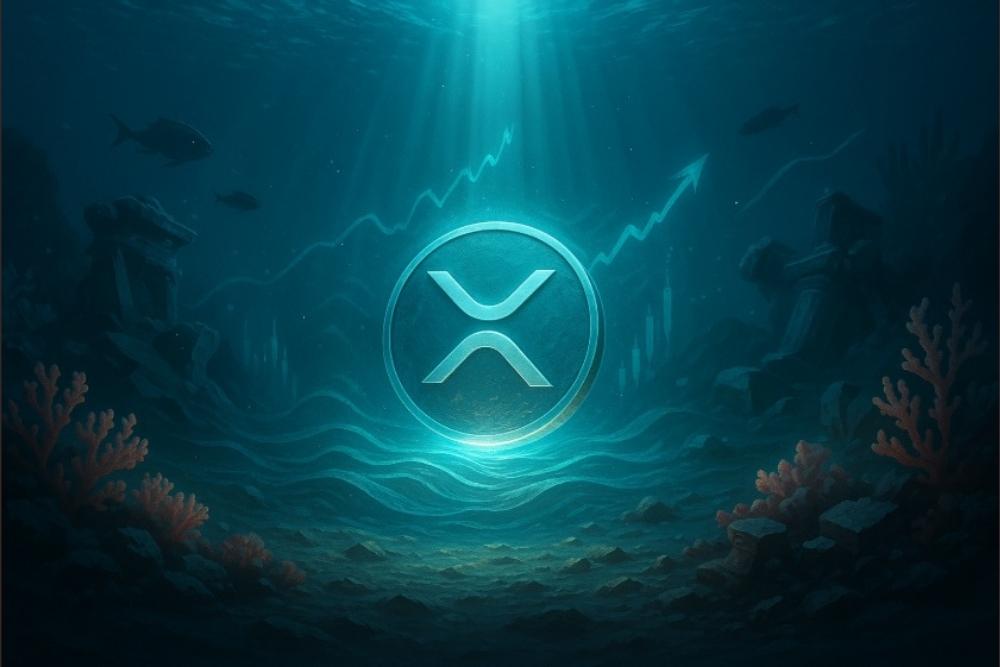
Versan Aljarrah, founder of Black Swan Capitalist, recently claimed that XRP is “quietly becoming the language banks use to communicate.”
According to Aljarrah, XRP is a technology designed to shape how financial institutions handle cross-border settlement, payment corridors, and real-time transactions.
Black Swan Capitalist founder suggested that XRP is no longer just another digital asset but is positioned as a foundational element for the infrastructure banks need to move value across borders with speed and reliability.
He emphasized the shift already underway in global finance. He pointed to settlement corridors and payment networks being rewritten around XRP as financial institutions and service providers look for efficiency and cost reductions. The focus of his post shows confidence that the asset’s utility is expanding at an institutional level rather than remaining confined to retail speculation.
XRP is quietly becoming the language banks use to communicate. Settlement corridors, payment networks, and cross-border flows are all being rewritten around it.
— Black Swan Capitalist (@VersanAljarrah) September 22, 2025
Why XRP Stands Out Against Other Digital Assets
XRP’s design gives it several advantages over large-cap cryptocurrencies, including Bitcoin and Ethereum. Its consensus mechanism allows much faster transaction processing, which can be completed in seconds rather than minutes or hours.
XRP has been described as 120,000 times more energy efficient than Bitcoin, and this design makes it more suitable for high-volume, real-time settlement systems used by banks and payment companies.
Transaction costs on the XRP Ledger are also among the lowest in the crypto space, which is critical for global institutions managing large numbers of transfers daily.
We are on X, follow us to connect with us :- @TimesTabloid1
— TimesTabloid (@TimesTabloid1) June 15, 2025
Potential Impact on XRP Price and Market Position
Aljarrah’s perspective suggests that if banks continue to adopt XRP for their settlement systems, it could translate into rising demand for the token itself. While no price predictions were made, increased use by banks could reduce reliance on traditional correspondent banking and potentially lift XRP’s market profile.
Greater utility tends to correlate with stronger market confidence, which could benefit its valuation over time. Community members responding to Aljarrah’s post reinforced this view, noting that many people may not yet grasp the scale of the changes taking place.
One commenter suggested that the technology is already being deployed in ways the public does not fully recognize. These reactions show that investors and observers follow the institutional progress of XRP and its infrastructure.
The Next Phase of Adoption
XRP’s trajectory, as described by Aljarrah, positions it to become more than a speculative digital asset. Its integration into banking systems would represent a significant step toward mainstream use of blockchain technology in the financial sector.
If the trends outlined in his post continue, XRP could occupy a central role in cross-border payments and settlement, potentially influencing its long-term value and status in the digital asset market.
Disclaimer: This content is meant to inform and should not be considered financial advice. The views expressed in this article may include the author’s personal opinions and do not represent Times Tabloid’s opinion. Readers are advised to conduct thorough research before making any investment decisions. Any action taken by the reader is strictly at their own risk. Times Tabloid is not responsible for any financial losses.
Follow us on X, Facebook, Telegram, and Google News

