
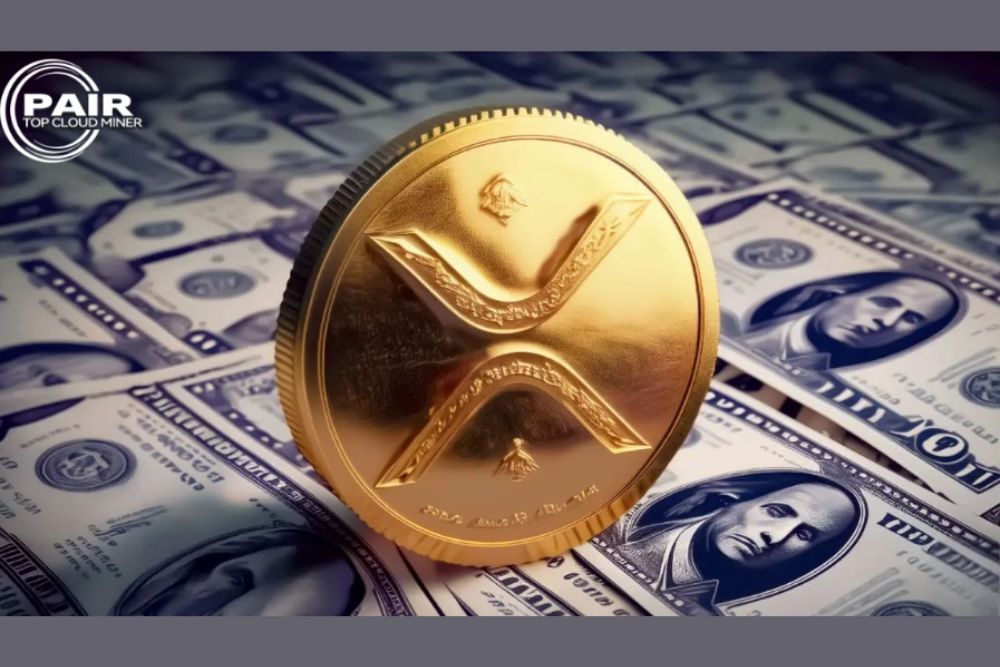
The financial landscape is shifting rapidly as traditional institutions embrace blockchain technology. Ripple’s newly announced collaboration with DBS Bank and Franklin Templeton is more than just another partnership; it signals that tokenized financial assets are shifting from theoretical promise to tangible market infrastructure.
Investors watching from the sidelines risk missing a pivotal transformation that could redefine how capital flows across global markets.
Ripple’s Strategic Partnership with Global Giants
On September 18, Ripple revealed a landmark agreement with Singapore’s DBS Bank and U.S.-based asset management powerhouse Franklin Templeton. The partnership aims to enable trading and lending of tokenized money market funds on the DBS Digital Exchange, powered by Ripple’s U.S. dollar–backed RLUSD stablecoin and Franklin Templeton’s sgBENJI token.
This initiative enables accredited and institutional investors to swap tokenized fund units for RLUSD and use them as collateral for loans, paving the way for large-scale tokenized finance.
If you are still not bullish on $XRP after seeing Ripple’s President just confirmed they’re solving trillion-dollar problems with DBS + Franklin Templeton
You’re about to miss the biggest money flow of our lifetime
Every $RLUSD tx burns XRP in XRP Ledger
Do the math. Wake up! pic.twitter.com/VoFOElFevi
— X Finance Bull (@Xfinancebull) September 20, 2025
Monica Long Highlights the Core Challenge
Reacting to the announcement, Ripple President Monica Long underscored that tokenized assets can only fulfill their promise when two conditions are met: liquid secondary markets and genuine on-chain utility, such as collateralization.
According to Long, this is precisely what Ripple, DBS, and Franklin Templeton are now building—laying the groundwork for institutional adoption and real-world utility that goes far beyond speculative trading.
X Finance Bull Issues a Stark Warning
The high-profile partnership and Long’s remarks triggered an emphatic response from market commentator X Finance Bull. Posting on X, the pundit cautioned that XRP holders who fail to recognize the significance of these developments may “miss the biggest money flow of our lifetime.”
He emphasized a key point often overlooked: every transaction involving RLUSD on the XRP Ledger burns a small amount of XRP, gradually reducing supply as network activity increases.
We are on X, follow us to connect with us :- @TimesTabloid1
— TimesTabloid (@TimesTabloid1) June 15, 2025
Understanding the XRP Burn Mechanism
The XRP Ledger requires a small XRP fee for each transaction, and a tiny fraction of XRP (“drops”) is destroyed after validation.
Although each burn is minuscule, high-frequency institutional usage, such as the trading and settlement envisioned in the Ripple–DBS–Franklin Templeton initiative, could magnify the cumulative effect over time. This creates a direct link between institutional adoption and XRP’s long-term tokenomics.
The Bottom Line for Investors
X Finance Bull’s warning is not mere hyperbole but a reminder of the evolving mechanics of digital finance. With major banks and asset managers now driving tokenized markets on the XRP Ledger, the infrastructure for large-scale value flows is in place.
Whether this becomes the “biggest money flow of our lifetime” will depend on how quickly institutions embrace these systems—but the opportunity is already taking shape, and time may not be on the side of those who hesitate.
Disclaimer: This content is meant to inform and should not be considered financial advice. The views expressed in this article may include the author’s personal opinions and do not represent Times Tabloid’s opinion. Readers are urged to do in-depth research before making any investment decisions. Any action taken by the reader is strictly at their own risk. Times Tabloid is not responsible for any financial losses.
Follow us on Twitter, Facebook, Telegram, and Google News

