

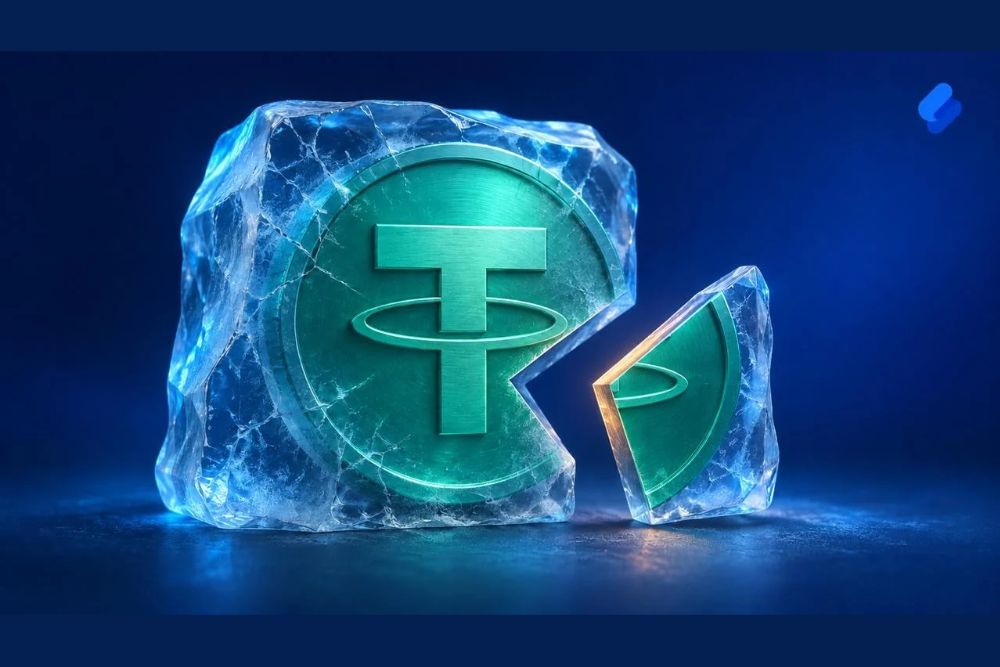
Tether says it froze more than $1.5 billion in stolen USDT within 30 minutes of the Binance hack. One earlier victim has waited over five years for its frozen tokens and was quoted a fee of a fifth of whatever comes back.
What Bloomberg found
On November 24, Bloomberg reported that Tether sought fees of up to 20% from some hack victims before reissuing their frozen USDT.
The clearest case is Bittok Technology, a Singapore crypto exchange that lost $50 million to hackers in June 2020. Tether froze part of the stolen USDT. According to emails Bloomberg reviewed, Tether’s lawyer later told Bittok’s new owner that any frozen USDT returned would carry a 20% reissuance fee. More than five years later, none of that USDT has come back.
In other recovery cases, people familiar with the talks told Bloomberg that victims received their USDT in installments, with a similar fee attached. Nothing in the reporting shows that any victim actually paid the full 20%, and Tether has not published that rate as policy for theft cases.
Tether’s answer came in two parts. A spokesperson said the company has reissued $1.2 billion in USDT so far, with the fees going toward recovery work and legal bills. CEO Paolo Ardoino said Tether returns funds in stages in civil cases because other claimants may come forward. “The problem is there is no guidance; there is no law that guides this,” he added. In practice, Tether leaves the terms of a return to its discretion.
Tether does publish a token recovery policy, but it covers a different case: tokens sent by mistake to an address or contract that doesn’t support them. In that case, the fee is up to 10% of the recovered amount or $1,000, whichever is higher. Thefts and scams go to a separate team that handles information requests, and the page gives no standard rate for reissuing stolen USDT.
Freezing works. Returning is the gap.
The freeze itself is a real tool against theft. Tether says that after Binance’s $6.3 billion hack on October 29, it froze more than $1.5 billion in stolen USDT within 30 minutes. Bitquery’s on-chain timeline puts Tether’s first freeze 37 minutes after the main drain on Ethereum. By that point, about $729 million in USDT had already left, mostly converted into ETH and TRX. Circle froze about $1.1 billion in USDC. On November 12, the Justice Department said public and private efforts had frozen more than $2.7 billion. It also said a court had cleared it to seize or restrain more than $1.2 billion of that.
Freezes are also becoming routine. By November 20, stablecoin issuers had frozen about $9 billion this year, more than twice the 2025 figure, according to BlockSec data Bloomberg cited.
Now look at the other side of the ledger. Tether says it has frozen more than $7 billion in USDT across secondary-market addresses, Binance funds included, and has reissued about $1.2 billion. By Tether’s account, that $1.2 billion went to rightful owners and law enforcement. The two figures don’t line up neatly. Tether says most of the frozen total is tied to fraud and theft, so not every frozen dollar has a victim waiting for it, and the Binance freezes are only weeks old. Still, most of the blocked value has not been returned.
Circle shows a different failure mode. In Wisconsin, a county court ordered Circle to freeze 381,235 USDC taken from a scam victim, and Circle complied. A later warrant told it to invalidate those tokens and send an equal amount to the local sheriff’s office. Prosecutors then filed a criminal complaint accusing Circle of obstruction, a case Circle calls meritless. In its motion to dismiss, Circle argued it cannot invalidate and reissue USDC held in a third-party wallet. The same filing disclosed a general agreement with federal prosecutors on victim compensation: tainted tokens stay blocked, and Circle can issue replacement USDC after a final forfeiture order.
The Binance case shows that path in action. In a November 23 forfeiture complaint, Circle agreed to issue new USDC to the U.S. government once a court orders forfeiture. One issuer reissues on its own terms. The other reissues on a court’s timetable. Either way, the holder does not set the clock.
What this means if you hold funds in stablecoins
Holding a stablecoin in your own wallet removes the risk of an exchange failing and locking up your funds. It does not remove issuer risk. Your keys control the address. The issuer controls the token contract.
“In traditional payments, a reversal comes with a published procedure and a deadline. Getting frozen stablecoins back usually comes with neither,” says Stefan Lauer, Head of Infrastructure at SimpleSwap. “What a holder can plan around is exposure: how much sits with one issuer, and how quickly it can move.”
A few practical rules:
- Know which issuer stands behind each stablecoin you hold, and on which network.
- Split large balances across issuers. If you don’t need dollar exposure, consider keeping part in native BTC or ETH. Neither has an issuer or a protocol-level freeze function, though both swing in price and can still be blocked once they sit on a custodial platform. Wrapped versions on other chains are tokens with their own controls.
- Check counterparties before large transfers. After the Binance hack, freezes also reached downstream wallets that had received stolen USDT. Funds that pass through a flagged address can end up frozen further down the line.
- Keep records of transaction hashes and wallet addresses. If funds are ever blocked after a theft, proof of ownership shortens every step.
- Don’t park large stablecoin balances on venues you don’t control. A hacked platform plus a frozen token means two queues instead of one.
Rebalancing without giving up custody
If this story has you rethinking how much sits in a single stablecoin, the next question is how to rebalance without parking funds on an exchange. SimpleSwap, a self-custodial swap aggregator on the market since 2018, does it wallet-to-wallet. It pulls quotes from 20+ CEX and DEX liquidity providers and picks a route. The converted asset goes straight to an address you control, and the platform holds no long-term balances for users. Moving part of a USDT balance into USDC or BTC is a single swap, with 2,800+ assets and 3.2M+ trading pairs to choose from.
For most crypto-to-crypto swaps, you don’t need an account. A fixed rate locks the quoted price for 20 minutes, while a floating rate follows the market. SimpleSwap’s fee is built into the quoted rate, and network fees are charged separately. KYC covers fiat purchases through payment partners and optional verification at registration. It may also be required for transaction security and compliance. Availability may be limited in some jurisdictions under the Terms of Service. The swap engine runs inside 6,000+ partner products, including the Exodus and Tangem wallets. Support works 24/7 with an average response time of about four minutes.
The feature that fits this story best is Address Check. Registered users can screen a wallet address through third-party services and get a risk level and any connections found. Run it before you accept a large stablecoin transfer from someone new, or before you send funds to an unfamiliar counterparty. It won’t catch everything, and getting the address and network right is still your job.
“A freeze protects the market. The return process decides whether it protects you,” Lauer says. “Self-custody handles the exchange half of that equation. You manage the issuer half by choosing what you hold and keeping the ability to move between assets.”
Stablecoins are dollars with an attached policy. Read the policy, then size your position.
Disclaimer: This content is meant to inform and should not be considered financial advice. The views expressed in this article may include the author’s personal opinions and do not represent Times Tabloid’s opinion. Readers are advised to conduct thorough research before making any investment decisions. Any action taken by the reader is strictly at their own risk. Times Tabloid is not responsible for any financial losses.

