

The proposal ends staking rewards, moves voting to Snapshot, and caps supply. Here is what changes for the people who hold API3, and the one action the team recommends stakers take.
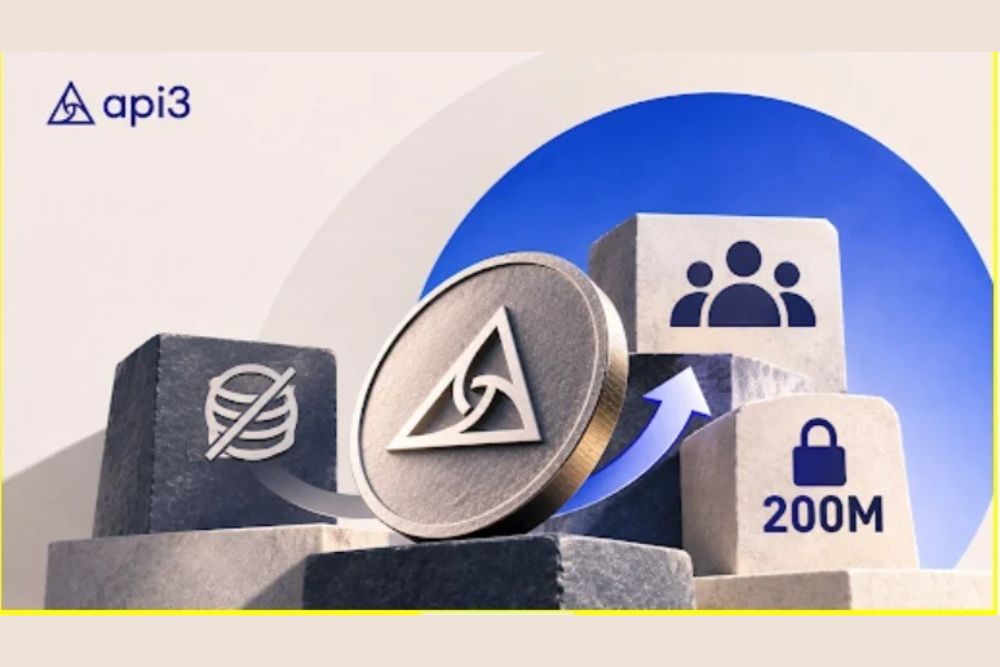
API3’s migration, executed on 4 November, is a significant change for the people who hold and stake its token. It ends the staking rewards that have run since 2021, moves voting to a one-token-one-vote model on Snapshot, and caps supply at 200,000,000. For holders, most of what changes is a simplification; for stakers, there is one concrete step the team recommends.
On governance, participation gets simpler. Since the migration, every API3 token is one vote, whether it is staked in the old system or simply held in a wallet. Holders no longer need to stake to have a say; from the first Snapshot proposal, everyone votes with what they hold. Quorum is set at 10,000,000 API3 in favor, and votes run for seven days.
On rewards, the staking emissions end. Those rewards were the source of the token’s 26% annual inflation, and ending them is what makes the fixed 200,000,000 supply possible. In their place, the protocol is directing revenue from its businesses into monthly buybacks of API3, shifting the token from an issuance model to a revenue-backed one.
The team recommends that stakers unstake and withdraw as their tokens unlock. Unstaking takes seven days, and rewards earned over the past year can be withdrawn as they vest. There are two practical reasons why. First, the pool has stopped minting, so there are no further rewards to earn by staying. Second, the protocol is deliberately retiring the legacy staking contract, so withdrawing moves tokens out of old code that is being wound down.
On supply, the cap is permanent. After a single final mint to reach 200,000,000, no new API3 can ever be created, and ownership of the token contract passes to an address no one controls. For existing holders, the era of dilution from staking rewards ends, and each holder’s tokens become a fixed share of a supply that can no longer grow.
Taken together, the changes ask less of holders, not more: no staking required to vote, no emissions to track, and a supply that is finally fixed. They are part of a wider reset that also simplifies governance and points the protocol toward data infrastructure for AI.
| “We wanted participation to be as simple as holding the token, and we wanted the supply to stop growing. This does both.”
said Emanuel Tesar, Tech Lead at API3. “If you stake, we recommend you to unstake and withdraw from the old pool as your tokens unlock, because the contracts are no longer maintained.” |
ABOUT API3
API3 builds data infrastructure that delivers signed, real-world data directly from the providers that produce it. It is governed by its token holders through the API3 DAO, with a fixed supply of 200,000,000 and a one-token-one-vote model in which anyone can take part using the tokens they hold. The project’s broader work and the marketplace itself can be explored at api3.org and airnodehub.api3.org
Disclaimer: This is a sponsored press release for informational purposes only. It does not reflect the views of Times Tabloid, nor is it intended for legal, tax, investment, or financial advice. Times Tabloid is not responsible for any financial losses.

