


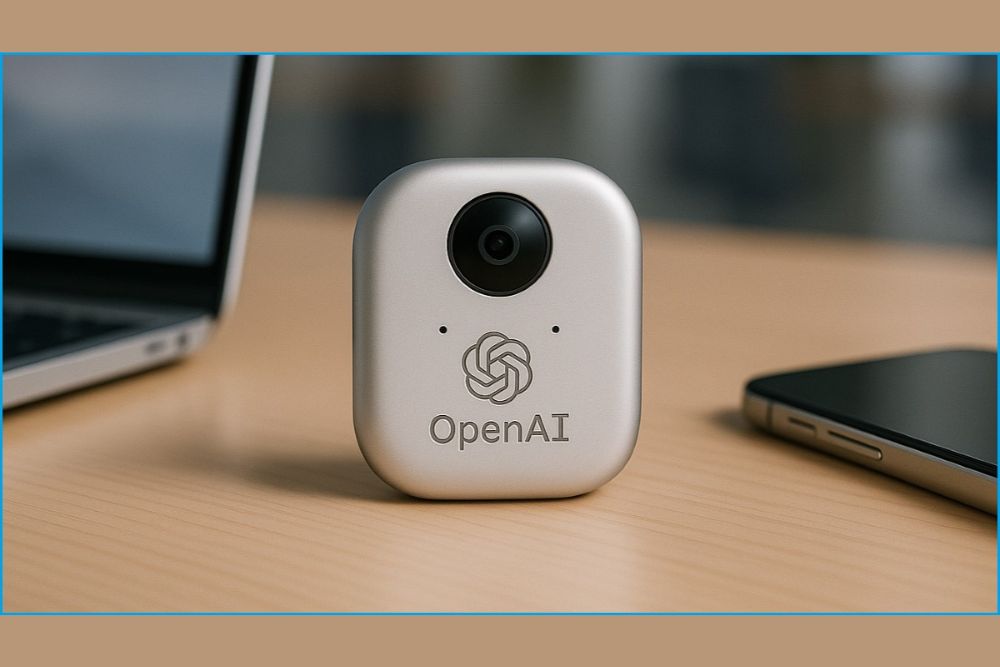
More than a year after acquiring Jony Ive’s hardware startup for $6.5 billion, OpenAI’s first physical product is finally coming into focus — and it’s built to feel less like an appliance and more like a presence in the room.
What’s Being Built
According to reporting from Bloomberg’s Mark Gurman, OpenAI is developing a screen-free smart speaker in partnership with LoveFrom, the design studio founded by former Apple chief design officer Jony Ive. The device is roughly the size of a hockey puck, shaped like a ring with a hole through the center, built from premium metal, and battery-powered — small enough to carry from a bedside table to a kitchen counter throughout the day. OpenAI is reportedly considering a price between $300 and $400, positioning it well above most existing smart speakers on the market, with a launch targeted for 2027 at the earliest.
The Design Is the Whole Point
Unlike a stationary speaker that just sits and listens, the device is engineered with moving parts that shift on their own — motion intended to signal when it’s listening or responding, making it feel more alive and present than a static gadget. It carries speaker grilles, microphones, ambient lighting, a camera, and environmental sensors that feed what it observes back into the AI system driving it. Functionally, it’s designed to work like an advanced version of ChatGPT’s voice mode, but with persistent memory that lets it learn about a specific user over time rather than starting fresh each conversation.
Earlier reporting from The Information described additional camera-based features under consideration, including facial recognition similar to Apple’s Face ID for authenticating purchases, and proactive suggestions based on observed behavior — for example, nudging a user toward an earlier bedtime ahead of a morning meeting on their calendar. Whether all of these specific features survive to the final shipped product remains unconfirmed; OpenAI has made no official statements, and all current details trace back to sourced reporting rather than company announcements.
The io Acquisition Finally Bears Fruit
This device is the first concrete product to emerge from OpenAI’s $6.5 billion acquisition of io Products, Ive’s hardware startup, which closed in May 2025. Tang Tan, another former senior Apple design executive, now serves as OpenAI’s chief hardware officer, reporting directly to Sam Altman. Ive is reportedly making the final call on nearly all major design decisions, and OpenAI has selected Luxshare — a major electronics manufacturer with deep experience building Apple products — to handle production, according to Notebookcheck’s reporting.
Why a Speaker, and Why Now
The strategic logic is fairly explicit: OpenAI wants to control the physical interface through which people interact with AI, rather than relying entirely on partners’ phones and computers. A dedicated device that’s always present, always listening, and carries persistent memory of its user is a meaningfully different product category than a chatbot app competing for attention among dozens of other apps on someone’s phone. It also positions OpenAI in direct competition with Amazon’s and Google’s existing smart speaker lines, but with a premium price point betting that genuinely more capable conversational AI justifies the markup.
The Apple Complication
The launch isn’t without friction. Apple has sued OpenAI over alleged trade secret theft connected to Ive’s hardware work, seeking an injunction — a legal dispute we’ve touched on in our coverage of the Altman-Musk industry rivalry, where OpenAI’s broader legal entanglements have become a recurring subplot. OpenAI denies the claims and says it’s pushing forward with development regardless.
What to Watch Next
Gurman notes OpenAI may still adjust pricing before launch based on pre-release sentiment testing — a sign the company itself isn’t fully settled on positioning yet. Beyond the speaker, OpenAI is reportedly also exploring smart glasses and a wearable pin, though those aren’t expected before 2028. Whether this becomes a genuinely new hardware category or an expensive misstep will likely hinge less on the engineering and more on whether people are willing to let an AI device with a camera and persistent memory live in their homes.
Sources: Bloomberg via BigGo Finance, MacRumors, The Next Web
Disclaimer: This content is meant to inform and should not be considered financial advice. The views expressed in this article may include the author’s personal opinions and do not represent Times Tabloid’s opinion. Readers are advised to conduct thorough research before making any investment decisions. Any action taken by the reader is strictly at their own risk. Times Tabloid is not responsible for any financial losses.

