

Crypto analyst X Finance Bull highlighted a significant data point in a recent post. He reminded the community that XRP’s On-Demand Liquidity volume reached $1.2 billion in Q1 2026, a 45% year-over-year increase. The figure reflects sustained institutional adoption, not just a short-term spike.
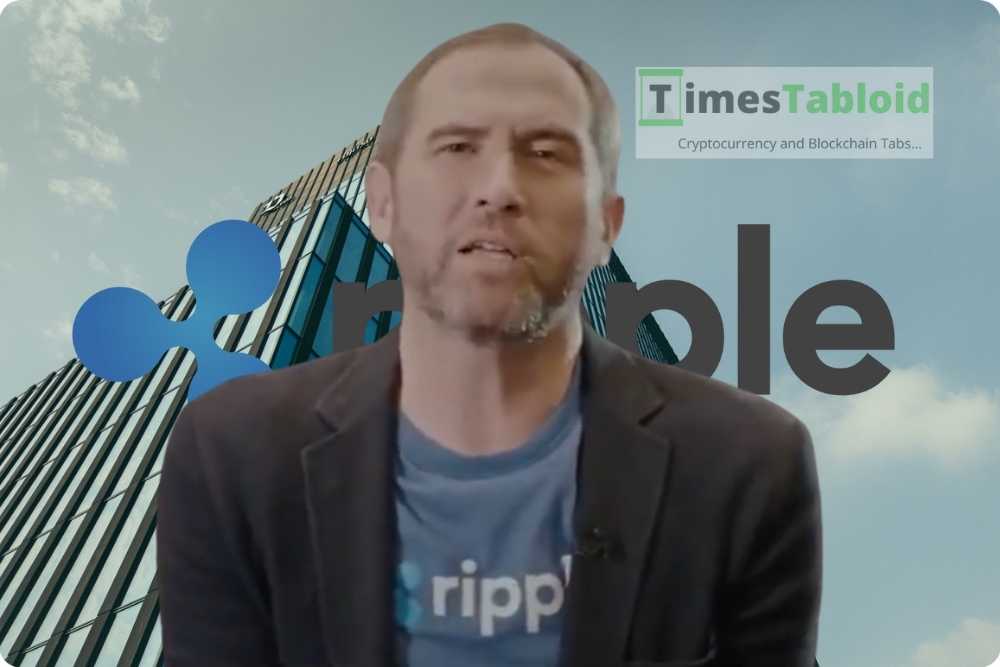
X Finance Bull paired the stat with a recent CNBC interview featuring Ripple CEO Brad Garlinghouse, who addressed what he believes is driving that growth. His answer focuses on XRP’s utility.
🚨 $XRP ARMY! Are you aware of this?👇
XRP ODL volume hit $1.2 billion in Q1 2026, up 45% year over year
Brad told CNBC the truth on live TV: utility drives value, not financial engineering
Real usage, growing fast
XRP proving itself quietlybearish? pic.twitter.com/XW6MspLNUm https://t.co/1j65NSSEce
— X Finance Bull (@Xfinancebull) June 27, 2026
Ripple CEO Puts Utility at the Center
Garlinghouse was clear about what drives long-term value in digital assets. “I think that financial engineering does not drive long-term value,” he said. He added that he has held this position for years, adding, “The long-term value of any digital asset is going to be driven by utility.”
He expanded on what utility requires in practice: “If it’s solving a problem at scale for real customers, you’re going to see liquidity, you’re going to see demand, you’re going to see trust in that asset.” The ODL volume data cited by X Finance Bull suggests XRP is meeting that standard.
The Numbers Back the Belief
Garlinghouse pointed to the scale of Ripple’s payment operations. The company cleared $16 trillion in payments through its prime brokerage business last year. The portion processed via digital assets was close to 0%. That gap represents the opportunity XRP is positioned to fill.
ODL volume growing 45% year over year reflects institutions adopting XRP as a settlement tool, drawn by the speed and cost efficiency of the XRP Ledger. Garlinghouse described XRP’s role as “really focused on payments and leveraging the speed and efficiency of that blockchain in a way for institutions.”
Ripple’s strategy has remained consistent. The company is bridging traditional finance with blockchain technology. Through acquisitions and organic growth, that strategy is producing measurable results.
We are on X, follow us to connect with us :- @TimesTabloid1
— TimesTabloid (@TimesTabloid1) June 15, 2025
Value Follows Function
Garlinghouse contrasted XRP’s growth with what he sees as the risks of financial engineering. He pointed to Strategy, Michael Saylor’s Bitcoin-focused company, as an example. Strategy used leverage to accumulate Bitcoin. When the market turned, that leverage worked against them.
Their preferred stock, STRC, was pegged at $100 and now trades roughly 25% below that. Garlinghouse’s position is that real utility produces compounding demand. Borrowed capital produces compounding risk.
What the Growth Signals
Garlinghouse’s comments support X Finance Bull’s point that utility wins. A 45% increase in ODL in a single year confirms that institutional demand for XRP as a payment instrument is accelerating. Ripple is opening new pathways for XRP, and there is substantial room for growth.
Disclaimer: This content is meant to inform and should not be considered financial advice. The views expressed in this article may include the author’s personal opinions and do not represent Times Tabloid’s opinion. Readers are advised to conduct thorough research before making any investment decisions. Any action taken by the reader is strictly at their own risk. Times Tabloid is not responsible for any financial losses.
Follow us on X, Facebook, Telegram, and Google News

