
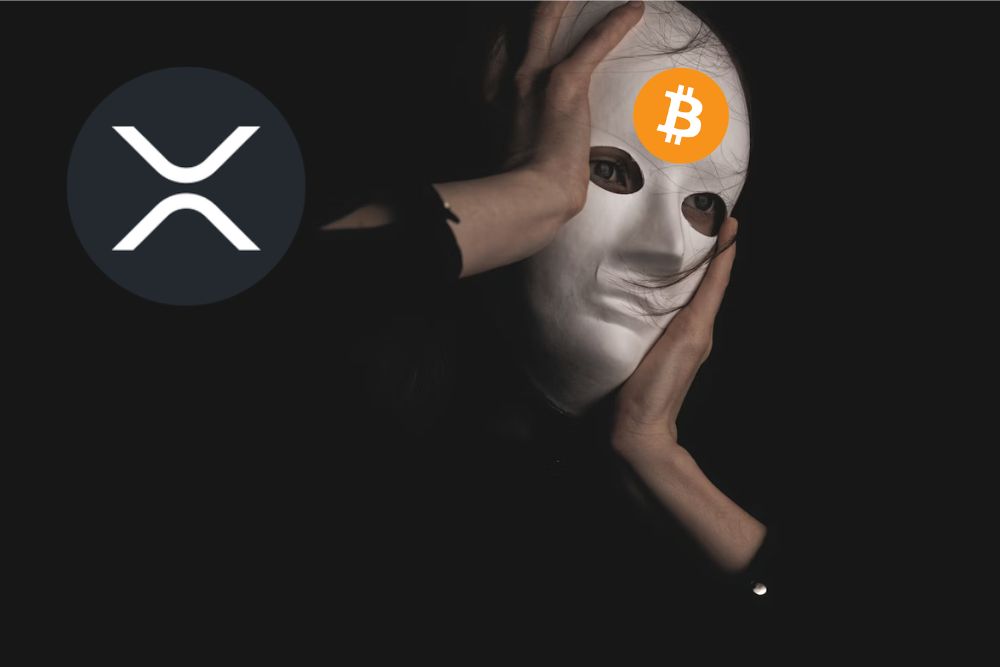
The question of what truly represents Satoshi Nakamoto’s original vision has resurfaced as the crypto industry matures and diverges into distinct use cases. As blockchain networks evolve, market participants continue to debate whether digital assets should function primarily as stores of value or remain focused on everyday payments and financial utility.
Crypto commentator Mickle reignited this debate through a short video shared on X, where the speaker compared the evolution of Bitcoin with the design philosophy of the XRP Ledger.
Revisiting Satoshi’s Original Payment Vision
The discussion centers on the interpretation of the original Bitcoin whitepaper, which described a peer-to-peer electronic cash system. The speaker in Mickle’s post argues that the Bitcoin ecosystem has gradually shifted away from that objective.
Is The XRP Ledger More Aligned With Satoshi's Vision Than Bitcoin?
#XRP #Crypto pic.twitter.com/RKZ6QAWtHF— mickle (@xrpmickle) April 29, 2026
He claims that Bitcoin now functions primarily as “digital gold,” driven by long-term value storage rather than transactional use. According to this perspective, rising transaction fees and slower settlement times have reduced Bitcoin’s practicality for everyday payments, pushing it toward a different role in the financial system.
XRP Ledger’s Focus on Payments and Utility
In contrast, the XRP Ledger maintains a design centered on speed, scalability, and low-cost transactions. It processes payments in seconds and supports built-in features such as a decentralized exchange, which enables direct asset trading on-chain.
The speaker argues that this architecture aligns more closely with the original idea of digital cash. He suggests that a truly functional peer-to-peer system must prioritize usability for everyday transactions rather than long-term asset storage.
Two Competing Interpretations of Crypto Evolution
The debate highlights a broader philosophical divide within the crypto industry. Bitcoin advocates emphasize its role as a decentralized store of value, highlighting security, scarcity, and resistance to inflation as core strengths.
We are on X, follow us to connect with us :- @TimesTabloid1
— TimesTabloid (@TimesTabloid1) June 15, 2025
Meanwhile, proponents of payment-focused networks argue that real-world utility defines the original promise of cryptocurrency. They point to systems like the XRP Ledger as examples of blockchain technology optimized for financial movement rather than speculative holding.
Technical Design vs. Market Evolution
While Bitcoin’s design prioritizes security and decentralization, its throughput limitations and fee structure have influenced its shift toward a store-of-value narrative. In contrast, the XRP Ledger prioritizes throughput efficiency and settlement speed, enabling it to support high-volume transaction environments.
However, neither system fully invalidates the other’s trajectory. Instead, each reflects different responses to scalability, adoption pressure, and market demand over time.
No Definitive Measure of “Satoshi Alignment”
No universally accepted definition exists for measuring alignment with Satoshi Nakamoto’s intent beyond the original Bitcoin framework. The whitepaper defines a conceptual system but does not address how competing blockchain models should evolve.
A Debate That Mirrors Crypto’s Maturity
Ultimately, the discussion reflects the crypto industry’s broader evolution into specialized financial infrastructure. Bitcoin and the XRP Ledger now represent two distinct interpretations of decentralized value transfer—one prioritizing scarcity and preservation, the other emphasizing speed and transactional utility.
Disclaimer: This content is meant to inform and should not be considered financial advice. The views expressed in this article may include the author’s personal opinions and do not represent Times Tabloid’s opinion. Readers are urged to do in-depth research before making any investment decisions. Any action taken by the reader is strictly at their own risk. Times Tabloid is not responsible for any financial losses.
Follow us on Twitter, Facebook, Telegram, and Google News

